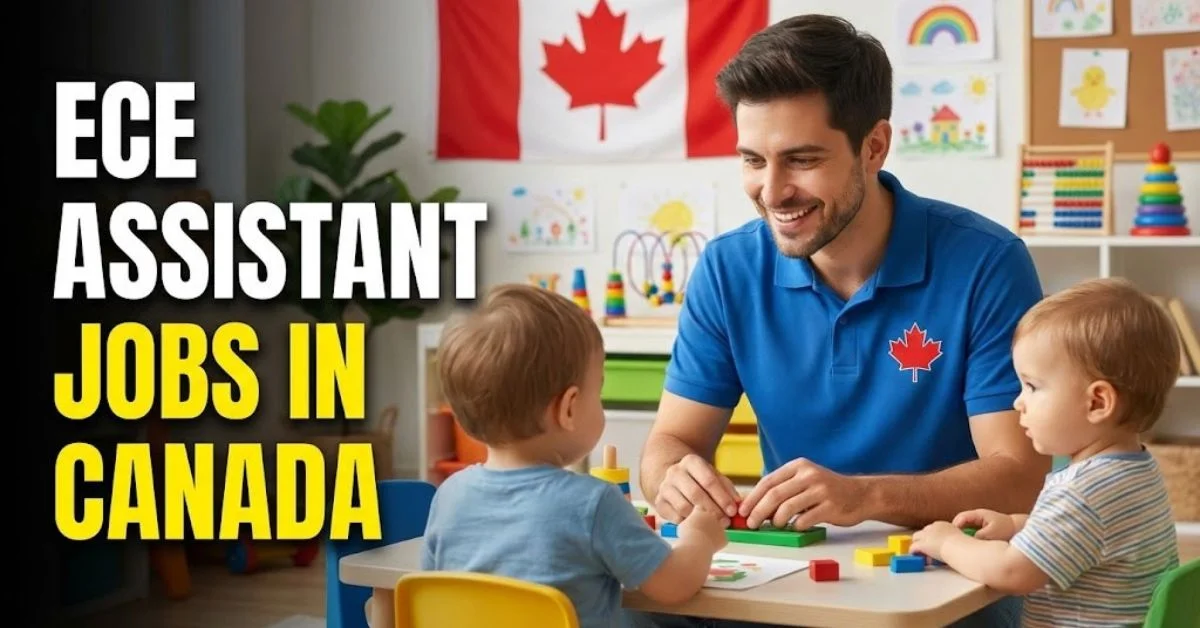
Canada needs many people to help care for young children in daycares, preschools, and early learning centers. Early Childhood Educator (ECE) Assistants play a key role in this field. These jobs support lead educators by helping with daily child care tasks.
Many employers offer visa sponsorship for qualified workers from other countries because there is a strong demand for helpers in this area.
This job falls under NOC code 42202 – Early childhood educators and assistants. It covers roles where you work with babies, toddlers, and young kids up to age 12. Assistants provide care under the guidance of trained educators.
The work includes playing with children, helping with meals, keeping spaces clean, and watching over safety.
Why These Jobs Are in High Demand
Canada faces a shortage of workers in child care. Government reports show thousands of job openings across the country. For example, official sites like Job Bank list hundreds of positions for ECE assistants right now.
Provinces like British Columbia, Ontario, and Alberta have extra need due to growing families and new child care programs.
The government gives priority to this field in immigration. In recent years, early childhood educators and assistants have been targeted in Express Entry draws for permanent residence.
This makes it easier for skilled workers to stay long-term.
Job outlooks remain positive. Many openings come from new child care spots and people leaving the field. Demand stays high in cities and rural areas alike.
What ECE Assistants Do Every Day
The job is hands-on and rewarding if you like working with kids. Common duties include:
- Helping children with play activities to support learning and growth
- Assisting with feeding, changing diapers, and naps
- Keeping the classroom or play area safe and clean
- Observing children’s behavior and sharing notes with lead educators
- Supporting group activities like story time, crafts, or outdoor play
- Comforting children when they feel upset
You work in teams, so good communication helps a lot. Shifts often match child care hours, like mornings to afternoons, with some full-day or part-time options.
Basic Requirements to Get Started
Most employers look for simple qualifications. You do not always need advanced degrees for assistant roles. Key requirements often include:
- High school diploma or equivalent
- Some training or certificate in early childhood education (many short programs exist)
- Experience with children (volunteer work or family care counts)
- Clear criminal background check
- Good health and up-to-date immunizations
- Basic English or French skills (some jobs need proof like language tests)
In some provinces, you may need to register with a local body after arrival. Short courses help you meet rules and improve job chances.
How Visa Sponsorship Works for These Jobs
Visa sponsorship means an employer helps you get a work permit to come to Canada. The most common path uses the Temporary Foreign Worker Program with an LMIA (Labour Market Impact Assessment). The employer proves no Canadian can fill the job, then sponsors you.
Steps usually look like this:
- Find a job offer from a Canadian employer willing to sponsor.
- Employer applies for LMIA (if required).
- You apply for a work permit with the job offer and LMIA approval.
- After arrival, work and gain experience.
- Later, apply for permanent residence through programs like Express Entry or provincial nominations.
Some jobs lead to permanent status faster because of the education category in immigration draws. Always check current rules on the official IRCC website, as processes can change.
Here is a simple table of common visa paths for ECE assistant roles:
| Path | Key Feature | Who It’s For | Typical Time to Start Work |
|---|---|---|---|
| LMIA-based Work Permit | Employer proves need for foreign worker | Unskilled or semi-skilled assistants | 3-12 months |
| Express Entry (with job offer) | Points-based, priority for educators | Those with training/experience | Varies, faster with points |
| Provincial Nominee Program | Province picks workers for local needs | Jobs in high-demand areas | 6-18 months |
Where to Find These Jobs
Look on trusted sites to start your search:
- Job Bank (government site) – shows hundreds of ECE assistant postings
- Indeed.ca – search “ECE assistant visa sponsorship” or “early childhood assistant LMIA”
- Workopolis or SimplyHired for childcare listings
- Specialized sites like ChildCareAdvantage.com for sponsorship-focused roles
Many postings mention “visa sponsorship available” or “LMIA support.” Apply directly with a resume that highlights any child care experience. Include a cover letter explaining your interest in Canada.
Tips for applying:
- Update your resume in Canadian style (short, clear, with skills first)
- Get references from past child care work
- Prepare for video interviews
- Be patient – good offers take time
Salary and Benefits
Pay varies by province and experience. Entry-level ECE assistants often earn around $17 to $22 per hour. Full-time roles can bring $35,000 to $45,000 a year or more with overtime.
Benefits may include:
- Health insurance
- Paid time off
- Help with training costs
- Support for licensing
Some employers offer relocation help for sponsored workers.
Final Thoughts
ECE assistant jobs offer a chance to build a career in a caring field while contributing to Canadian communities. With strong demand and sponsorship options, it’s a practical path for many people from around the world. Start by checking job sites, building skills, and reaching out to employers.
Focus on real experience with children and basic training to stand out.
FAQs
What is the NOC code for ECE assistant jobs in Canada?
The code is 42202 for early childhood educators and assistants, which covers helper roles in child care.
Do I need a degree for ECE assistant positions with sponsorship?
No, many jobs accept a high school diploma plus short training or experience; a full degree is not always required.
How can I check if a job offers visa sponsorship?
Look for words like “visa sponsorship,” “LMIA,” or “open to foreign workers” in postings on Job Bank or Indeed, and ask during interviews.