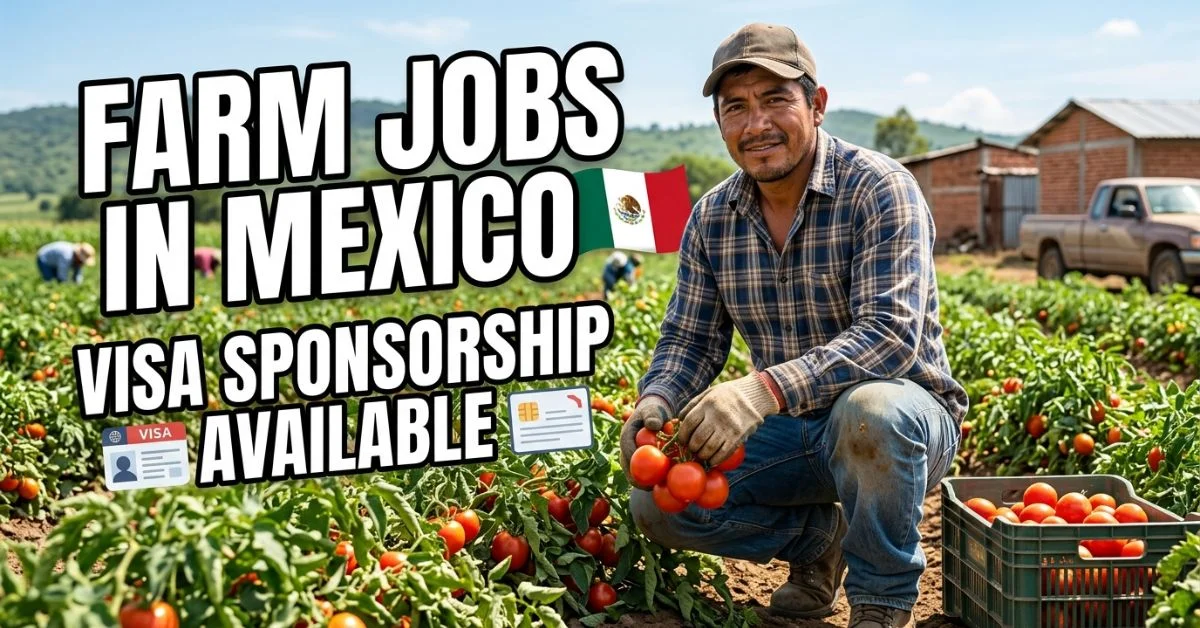
Agricultural opportunities in Mexico continue to grow as the country remains a global leader in the production of fruits, vegetables, and livestock. For many people looking for unskilled or less-skilled work, the Mexican agricultural sector offers a legitimate path to employment through various visa sponsorship programs.
These programs are designed to help local farms meet labor demands while providing foreign workers with legal status, fair wages, and essential benefits.
Understanding the Mexican Agricultural Work Landscape
Mexico is often recognized for its vast exports of avocados, tomatoes, berries, and citrus fruits. Because many of these crops are labor-intensive, large-scale farms (often called agro-industrias) frequently look for additional hands to help with planting, harvesting, and packaging. For a foreigner, the key to working legally is finding an employer who is registered with the National Institute of Migration (INM). These employers are the ones who can “sponsor” your visa by providing a formal job offer.
Unlike some countries that only hire highly specialized experts, Mexico’s farming industry has a high demand for general laborers. These roles do not usually require a university degree or advanced technical training. Instead, employers look for reliability, physical stamina, and a willingness to learn on the job.
The Role of Visa Sponsorship for Farm Workers
Visa sponsorship is a legal process where a Mexican company or farm owner asks the government for permission to hire a non-citizen. This is essential because working without the correct permit can lead to legal issues or deportation. There are two primary ways an unskilled worker can enter the Mexican farm labor market legally.
The most common route for those from neighboring countries like Guatemala, Belize, El Salvador, and Honduras is the Regional Worker Visitor Card (TVTR). This specific permit allows individuals to work in the southern states of Mexico for a set period. For workers from other parts of the world, the process involves a Temporary Resident Visa with permission to work.
In both cases, the employer must initiate the process by applying for a “Constancia de Inscripción del Empleador.” Once the employer has this registration, they can issue a “Número Único de Trámite” (NUT), which is the official authorization code the worker needs to take to a Mexican embassy or consulate.
Popular Farm Job Roles for Beginners
If you are new to the agricultural sector, there are several positions that are easy to start with. Most of these roles provide on-site training, so you do not need to worry if you have never worked on a farm before.
Fruit and Vegetable Pickers
This is the most common entry-level job. Pickers are responsible for carefully removing ripe produce from plants or trees. Because products like berries and tomatoes are fragile, workers are taught how to handle them without causing damage. It is an outdoor job that requires moving through fields throughout the day.
Packaging and Sorting Staff
Once the crops are harvested, they must be cleaned, sorted by size or quality, and packed into boxes for shipping. This work usually takes place in a “packing house,” which is a shaded or indoor facility. It is less physically demanding than picking but requires speed and attention to detail.
Greenhouse Assistants
Many modern Mexican farms use large greenhouses (protected agriculture) to grow food year-round. Assistants in these facilities help with tasks like pruning plants, managing irrigation lines, and maintaining a clean environment. This is a great role if you prefer a more controlled environment away from direct sunlight.
General Maintenance Workers
Farms are large operations that need constant upkeep. General laborers may be asked to fix fences, clear irrigation ditches, or help move supplies from one area to another. These roles are perfect for those who enjoy variety in their daily tasks.
Key Agricultural Regions in Mexico
Employment opportunities are often concentrated in specific states depending on the type of crop. Knowing where the work is located can help you target your job search more effectively.
- Sinaloa: Known as the “breadbasket of Mexico,” this state is a leader in tomato and vegetable production. Most hiring happens during the winter and spring months.
- Michoacán: This is the heart of avocado production. Work here is often year-round due to the constant demand for exports.
- Jalisco: This region is famous for its “Berries” (strawberries, raspberries, and blueberries). Many large international companies operate here and offer formal sponsorship.
- Sonora: A major hub for grapes and livestock. The farms here are often very large and utilize modern technology.
Step-by-Step Application Process for Workers
Getting a sponsored farm job involves a clear sequence of steps. You cannot simply show up at the border and ask for a work permit; you must have the job offer secured beforehand.
- Find a Registered Employer: Look for large agricultural companies or cooperatives that explicitly mention visa sponsorship or hiring foreign labor.
- Receive the Job Offer: The employer will send you a formal contract or offer letter. This document will state your salary, hours, and the duration of the work.
- The NUT Authorization: Your employer will submit your details to the INM in Mexico. If approved, they will give you a NUT (Unique Processing Number).
- Visit the Consulate: Take your NUT, your valid passport, and the required photos to the nearest Mexican embassy or consulate in your home country.
- The Interview: A consular officer will ask simple questions about your job and your background. Once approved, the visa is placed in your passport.
- Entry and Registration: Upon arriving in Mexico, you may need to visit a local migration office to receive your physical residency or worker card.
Essential Requirements and Documentation
To make the process go smoothly, you should have your documents ready in advance. Even for unskilled roles, the government requires basic identification to ensure safety and legality.
Required Checklist:
- Valid Passport: Your passport should be valid for at least six months beyond your intended stay.
- Proof of Identity: National ID cards or birth certificates are often helpful.
- Clean Criminal Record: Some employers and visa categories require a document showing you have no legal issues in your home country.
- Medical Fitness: Farm work is physical. You should be in good health and able to work in warm climates.
- Employer’s Documents: You must have a copy of the employer’s registration (Constancia) and the NUT.
Table of Common Farm Roles and Requirements
| Job Title | Primary Duties | Skill Level | Typical Environment |
| Harvest Picker | Picking ripe fruits/vegetables | Entry/Unskilled | Outdoor Fields |
| Packer | Sorting and boxing produce | Entry/Unskilled | Packing Warehouse |
| Greenhouse Worker | Plant care and pruning | Low Skill | Controlled Greenhouse |
| Irrigation Helper | Laying and fixing water pipes | Low Skill | Outdoor/Field |
| Livestock Hand | Feeding and cleaning animals | Unskilled | Barns/Ranches |
Benefits and Working Conditions
When you are hired through a legal sponsorship program, you are entitled to certain protections under Mexican labor law. This is why it is so important to avoid “under the table” work and stick to legitimate sponsored roles.
Most sponsored farm jobs include basic housing or a housing allowance, especially if the farm is in a rural area. Many employers also provide transportation from the living quarters to the fields. Wages are usually paid weekly or bi-weekly. While agricultural pay in Mexico is lower than in the U.S. or Canada, the cost of living is also significantly lower, allowing workers to save money or send it back home.
Furthermore, legal workers are often covered by social security (IMSS), which provides access to medical care if you get sick or injured on the job. Always ensure your contract mentions these benefits before you sign.
Finding Legit Opportunities
To find these jobs, you can use official government portals, reputable international job boards, or contact the labor departments of the major Mexican states mentioned above. Many large-scale farms also have “Work With Us” sections on their websites where they list seasonal openings for the upcoming harvest seasons.