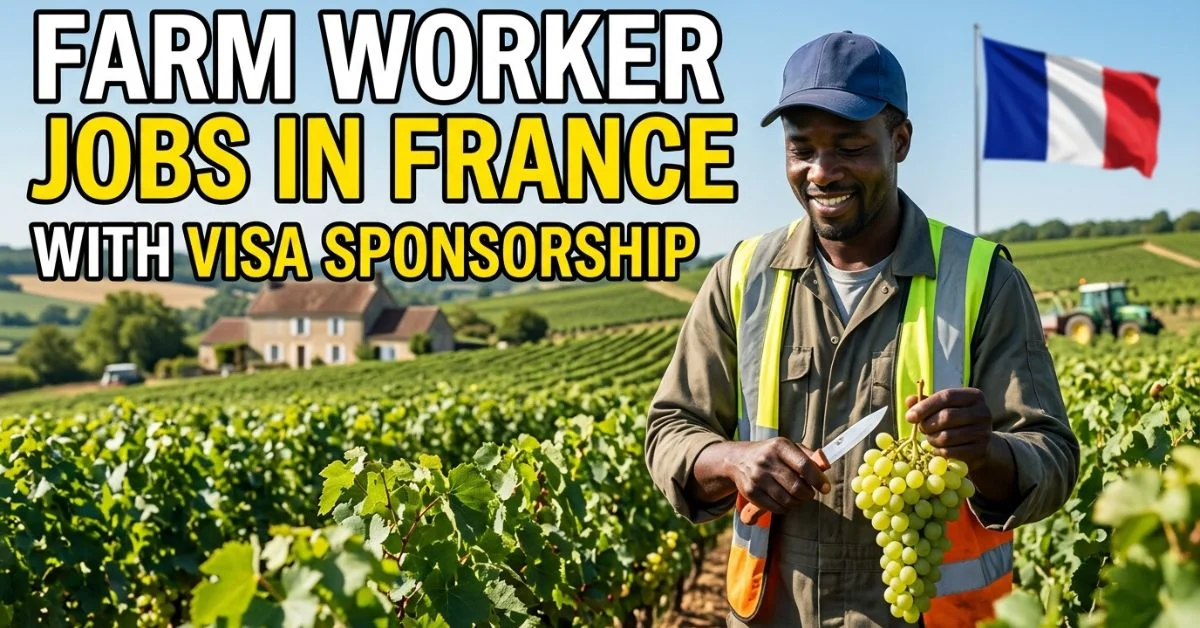
Farm worker jobs in France offer a great chance for people from all over the world to work in a beautiful country while earning a stable income.
The French agricultural sector is one of the largest in Europe, and every year, many farms need extra help to harvest crops, manage livestock, and maintain the land.
For workers coming from outside the European Union (EU), the French government has a specific seasonal worker visa system that includes sponsorship from the employer.
This article explains how the process works for unskilled or less-skilled workers, what requirements you need to meet, and how to find these opportunities.
Understanding the Seasonal Worker Visa in France
The primary pathway for farm workers is the Seasonal Worker Visa (Travailleur Saisonnier). This is a special permit designed for people who want to work in sectors like agriculture, where the workload depends on the time of year.
Unlike a standard work visa, the seasonal worker permit is usually valid for three years, but it has specific rules on how long you can stay. You are allowed to work in France for a maximum of six months within any 12-month period.
This means you can return to your home country after the harvest and come back to France the following year without having to apply for a brand-new permit from scratch every time, provided your contract is renewed.
Key Benefits of Working on French Farms
Choosing to work on a French farm comes with several advantages, especially for those who may not have high-level technical skills or university degrees.
- Fixed Minimum Wage: All workers in France, including seasonal farm hands, are protected by the national minimum wage (SMIC). This ensures you receive a fair salary for your labor.
- Renewable Opportunities: Because the permit can last for three years, you can build a long-term relationship with a French employer.
- Practical Experience: You will gain hands-on experience in modern farming techniques, fruit picking, or animal care.
- Travel within Europe: While your visa is for work, you may have the opportunity to explore France and other parts of the Schengen Area during your time off.
Common Job Roles for Unskilled Farm Workers
Farming in France is diverse. Depending on the region and the season, you might find different types of work. Most of these roles do not require previous experience, though being physically fit is very important.
Fruit and Vegetable Harvesting
This is the most common job for seasonal workers. It involves picking grapes (the famous vendange), apples, strawberries, peaches, or tomatoes. The work is mostly outdoors and requires stamina.
Vineyard Maintenance
France is world-famous for its wine. Vineyard workers help with pruning vines, removing weeds, and preparing the fields for the next growing season.
Livestock Assistance
Some farms focus on dairy or meat production. Tasks here include feeding animals, cleaning barns, and assisting with general farm maintenance like repairing fences.
Packing and Sorting
After the harvest, many products need to be sorted by size or quality and packed into boxes for shipping. This work often takes place in warehouses or greenhouses.
Eligibility and Requirements for Applicants
To qualify for a farm worker job with visa sponsorship, you must meet certain basic criteria set by the French government and the OFII (French Office for Immigration and Integration).
Basic Requirements
- Age: You must be at least 18 years old.
- Job Offer: You must have a signed employment contract from a registered French employer.
- Passport: Your passport must be valid for at least three months after your planned stay ends.
- Clean Record: You should have a clean criminal record from your home country.
- Health: You may be required to undergo a basic medical check-up.
Document Checklist
| Document Type | Description |
| Valid Passport | Must have at least two blank pages. |
| Work Authorization | Obtained by your employer from the French labor department (METI/DREETS). |
| Proof of Housing | A letter or document showing where you will live in France. |
| Application Form | A completed and signed Long-Stay Visa application. |
| Photographs | Recent passport-sized photos meeting EU standards. |
| Visa Fee | Payment for the visa processing (usually around €99). |
How the Sponsorship Process Works
Visa sponsorship in France is “employer-led.” This means your employer does the heavy lifting to get the legal permission for you to work.
- Finding a Job: You first apply for a job and receive an offer.
- Work Authorization: The employer applies for a “Work Permit” (Autorisation de travail) online through the French government portal. They must prove that they could not find a local worker for the role.
- OFII Notification: Once the work permit is approved, the French authorities notify the OFII and the French embassy in your country.
- Visa Application: You then go to the French embassy or a visa application center (like VFS Global or TLScontact) in your home country to submit your passport and documents.
- Arrival in France: After your visa is stamped, you can travel to France. Within the first few months, you must validate your visa online to make it a legal residence permit.
How to Find Farm Jobs with Sponsorship
Finding a legitimate employer is the most important step. Because you need an official contract for the visa, you should avoid “cash-in-hand” offers that do not provide paperwork.
- Pôle Emploi (now France Travail): This is the official French national employment agency. Their website has a dedicated section for seasonal work (travail saisonnier).
- EURES Portal: The European Job Mobility Portal lists many agricultural roles across Europe, including France, that are open to international applicants.
- ANEFA: The National Association for Employment and Training in Agriculture (ANEFA) is a specialized French site for farm jobs.
- Recruitment Agencies: Some agencies, like Agri-HR, specialize in bringing seasonal workers to Europe.
- Direct Contact: Many people find success by searching for “Fermes” (farms) or “Vignobles” (vineyards) in specific French regions like Bordeaux or Champagne and contacting them directly via email.
Practical Tips for Success
Working on a farm is rewarding but can be difficult. Here are a few tips to help you prepare:
- Learn Basic French: While you don’t need to be fluent, knowing simple words for “tools,” “left/right,” and “hello/thank you” will help you follow instructions.
- Prepare for Physical Labor: Farm work involves standing, bending, and lifting for many hours. Good boots and waterproof clothing are essential.
- Check Housing Details: Many farm contracts include “logement” (housing). Always ask if the employer provides a place to stay and if it is free or deducted from your salary.
- Apply Early: Most farmers start looking for workers 3 to 4 months before the harvest season begins.
France continues to be a top destination for agricultural workers. By following the legal steps and securing a sponsored contract, you can gain valuable international experience and support your family back home.