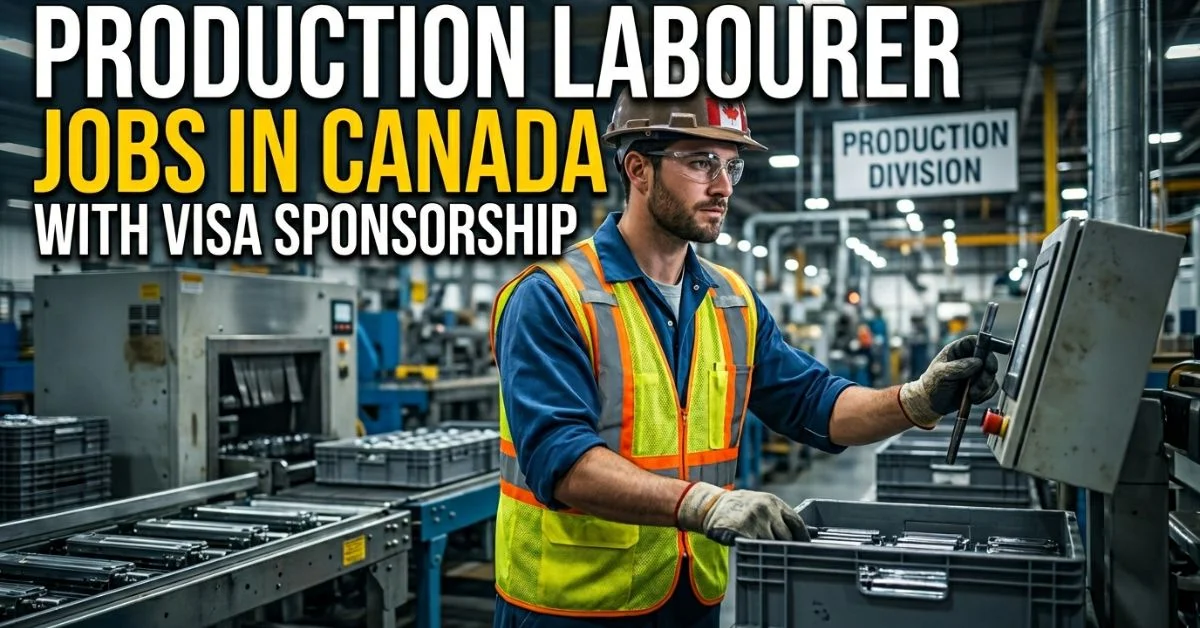
Moving to Canada as a production labourer is a popular choice for many people looking for a better life. The good news is that Canadian factories, food plants, and warehouses constantly need hardworking people to help make and pack products. Many of these employers are willing to help foreign workers get a visa through a process called “visa sponsorship.”
This article explains how you can find these jobs, what you need to apply, and how the visa process works for unskilled or less-skilled workers.
Understanding Production Labourer Jobs
A production labourer is a person who helps in the manufacturing or processing of goods. You do not usually need a college degree for this job. Most of the learning happens while you are working.
Common Tasks for Production Labourers
- Moving raw materials to the production line.
- Sorting and packing finished products into boxes.
- Cleaning the machines and the work area.
- Checking products for mistakes or damage.
- Helping senior machine operators with daily tasks.
What is Visa Sponsorship?
Visa sponsorship means that a Canadian employer has permission from the government to hire a foreign worker. To do this, the employer usually needs a document called a Labour Market Impact Assessment (LMIA).
A “positive LMIA” proves that the employer tried to find a Canadian worker but could not find anyone for the job. Once they have this, they can give you a job offer letter, which you use to apply for your Canadian work permit.
Requirements for Unskilled Workers
You do not need many certificates to work as a production labourer. However, there are some basic requirements you must meet to be successful:
- Age: You must be at least 18 years old.
- Education: Most jobs only require a high school diploma or just the ability to read and write.
- Language: You should be able to speak and understand basic English or French to follow safety rules.
- Health: You must be physically fit because the work involves standing for long hours and lifting heavy items.
- Clean Record: You will need a police clearance certificate to show you have no criminal history.
Popular Industries Hiring Foreign Labourers
Certain industries in Canada are more likely to sponsor foreign workers because they have a high demand for staff.
| Industry | Common Job Titles | Typical Locations |
| Food Processing | Food Packer, Meat Cutter, Bakery Helper | Ontario, Manitoba, Quebec |
| Agriculture | Greenhouse Worker, Harvest Labourer | British Columbia, Nova Scotia |
| Manufacturing | Factory Helper, Assembly Line Worker | Ontario, Alberta |
| Wood Products | Sawmill Worker, Cabinet Maker Helper | British Columbia, New Brunswick |
How to Find Sponsored Jobs
Finding a job from outside Canada requires using the right websites. Canadian employers looking for foreign workers often post on specific platforms.
1. The Canada Job Bank
This is the official government website. You can filter your search for “Foreign Workers” or “LMIA-approved” jobs. Look for the globe icon on the job posting, which means the employer is interested in hiring from abroad.
2. Private Job Portals
Websites like Indeed Canada and LinkedIn are great tools. Use search terms like “Production Labourer Visa Sponsorship” or “General Labourer LMIA.”
3. Direct Company Websites
Some large companies regularly hire foreign workers. You can visit their “Careers” page directly:
- Maple Leaf Foods: Often hires for meat processing.
- Olymel: Large food production company in Quebec and Alberta.
- Loblaws: Hires for warehouse and distribution centres.
- Sobeys: Large grocery chain with many warehouse needs.
The Application Process Step-by-Step
If you want to move to Canada as a labourer, follow these steps:
- Prepare your Resume: Make sure your resume (CV) follows the Canadian format. Focus on your physical strength, reliability, and any past experience in manual work.
- Apply for Jobs: Send your applications to companies that mention visa sponsorship or LMIA.
- Interview: If the employer likes your resume, they will call you for an interview, usually over a video call like Zoom or WhatsApp.
- Receive the Job Offer: If you are hired, the employer will send you a Job Offer Letter and a copy of the positive LMIA.
- Apply for the Work Permit: Use the LMIA and the job offer to apply for a work permit through the Immigration, Refugees and Citizenship Canada (IRCC) website.
- Medical and Biometrics: You will be asked to do a medical check-up and give your fingerprints at a local visa centre.
Benefits of Working in Canada
Working as a production labourer in Canada offers many advantages beyond just a paycheck:
- Fair Wages: Labourers in Canada earn a decent hourly wage, usually between $16 and $25 per hour, depending on the province.
- Safety: Canada has very strict laws to protect workers. You will be given safety gear and training.
- Healthcare: Most workers have access to medical insurance while they are working.
- Path to Permanent Residency: After working in Canada for some time, you may be able to apply to stay permanently through programs like the Provincial Nominee Program (PNP) or the Rural and Northern Immigration Pilot.
Important Tips for Success
- Be Careful of Scams: Never pay a recruiter for a job. In Canada, it is illegal for an employer or agent to charge a worker for a job.
- Focus on Rural Areas: Provinces like Saskatchewan, Manitoba, and New Brunswick often have more job openings for labourers than big cities like Toronto or Vancouver.
- Learn Basic English: Even if the job is “unskilled,” being able to talk to your supervisor will help you get the job faster.