The Netherlands is known for its strong economy and open labor market, making it a popular destination for people looking for work. If you are someone with limited experience or specialized skills, entry-level office support roles can be an excellent way to enter the workforce.
These roles, often called office helpers or general office assistants, focus on keeping daily operations running smoothly.
Unlike specialized professional roles, these positions value reliability, a positive attitude, and a willingness to handle a variety of practical tasks.
Understanding the Office Helper Role
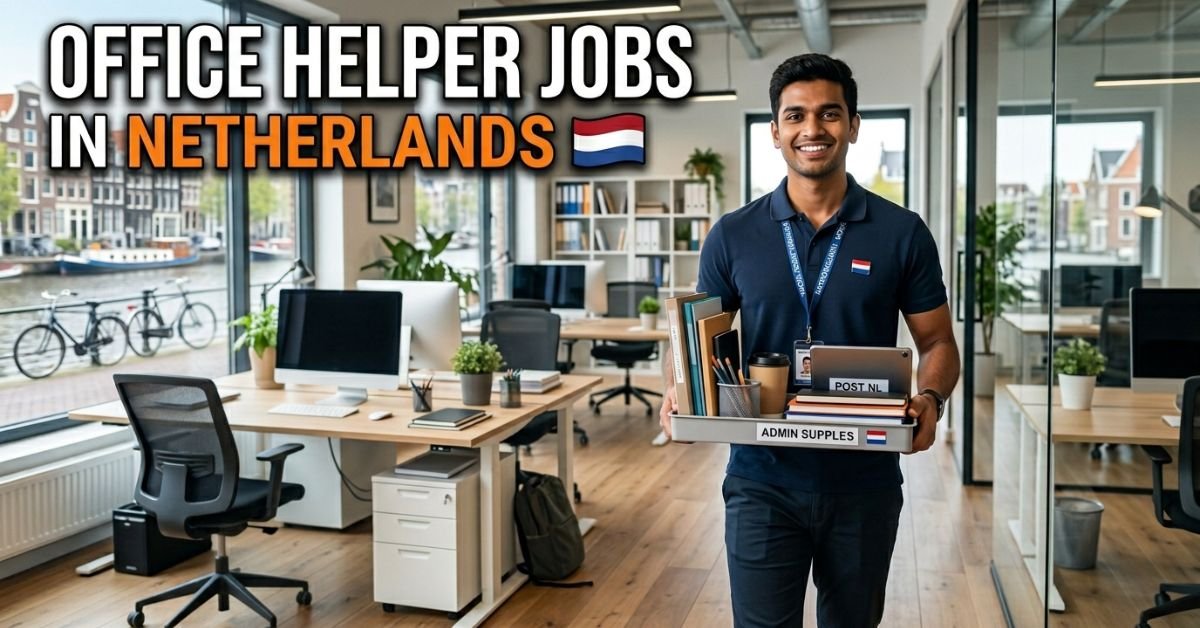
An office helper is a support staff member who handles the physical and administrative basics of a workplace. In the Netherlands, many companies, from small startups to large international firms, need people to manage the “small things” so that the rest of the team can focus on their specific projects. Because the work is varied, no two days are exactly the same.
This job is ideal for individuals who prefer being active rather than sitting at a desk for eight hours straight. You might find yourself moving between the reception desk, the mailroom, and the kitchen area. The primary goal of the role is to provide a helping hand wherever it is needed.
Common Daily Responsibilities
- Mail and Deliveries: Receiving packages, sorting letters, and ensuring they reach the right desk. You may also help prepare outgoing mail and schedule courier pickups.
- Kitchen and Refreshments: Keeping the coffee machines filled, checking that water is available in meeting rooms, and occasionally ordering lunch for the team.
- Office Tidiness: Ensuring that shared spaces like meeting rooms and printer areas are neat. This is not necessarily a cleaning job, but more about organizing papers and supplies.
- Supply Management: Monitoring the stock of pens, paper, ink, and stationery. When supplies run low, you notify the manager or place a simple order.
- Basic Data Tasks: Scanning documents, filing papers into folders, or entering simple information into a computer system.
- Guest Support: Greeting visitors at the door and showing them to the waiting area or a specific meeting room.
Requirements for Entry-Level Candidates
You do not need a university degree or years of specialized training to become an office helper. However, there are certain basic qualities and skills that Dutch employers look for when hiring for these positions.
Language Skills
While Dutch is the official language, the Netherlands has a very high level of English proficiency. In many international offices in cities like Amsterdam or Rotterdam, English is the primary language spoken. Being able to understand and speak basic English is often enough for an office helper role. If you know a few Dutch phrases, it is seen as a big plus and helps you connect with your colleagues.
Essential Soft Skills
For less-skilled roles, your personality and work ethic are your greatest assets. Employers look for:
- Punctuality: Arriving on time is very important in Dutch work culture.
- Organization: Being able to keep track of different tasks without getting confused.
- Friendliness: Since you will interact with many people, a polite and helpful manner is key.
- Flexibility: Being willing to jump from one task to another as the need arises.
Basic Computer Literacy
You do not need to be an expert, but knowing how to use an email inbox and open a document in Microsoft Word or Excel is usually required. Most offices use digital systems for almost everything, so feeling comfortable with a computer is a baseline requirement.
Summary of Typical Job Aspects
| Feature | Description |
| Typical Hours | Usually 32 to 40 hours per week (Full-time). |
| Experience Needed | 0 to 1 year; often open to beginners. |
| Key Tools | Computers, printers, coffee machines, and mail scales. |
| Common Locations | Amsterdam, Rotterdam, Utrecht, The Hague, and Eindhoven. |
| Employment Type | Often starts with a temporary contract through an agency. |
How to Find and Apply for Jobs
The Dutch job market relies heavily on recruitment agencies, known locally as uitzendbureaus. These agencies act as a bridge between you and the employer. They are a great starting point for unskilled workers because they often have a high volume of entry-level roles.
Using Recruitment Agencies
Agencies like Randstad, Adecco, and Manpower are some of the largest in the country. They have offices in almost every major city. You can walk into one of these offices or register on their websites. When you register, an agent will look at your profile and try to match you with a company that needs immediate help.
Popular Online Job Portals
- Indeed Netherlands: A very popular site where you can search for “Office Assistant” or “General Helper” roles.
- LinkedIn: Useful for following companies you like and seeing when they post support roles.
- YoungCapital: This agency specifically focuses on young people and those looking for entry-level opportunities.
- Together Abroad: A good resource if you are an international resident looking for English-speaking environments.
Salary and Work Benefits
The Netherlands has strict laws that protect workers, ensuring you receive fair pay and benefits even in entry-level positions.
Pay Scales
The salary for an office helper generally follows the national minimum wage guidelines. For a full-time position, you can expect a gross monthly salary ranging from approximately €2,100 to €2,600. The exact amount depends on your age and the specific company’s collective labor agreement (CAO).
Standard Benefits
- Holiday Allowance: By law, you are entitled to a holiday allowance, which is usually 8% of your gross yearly salary. This is often paid out in May or June.
- Paid Vacation: Most full-time workers get at least 20 to 25 days of paid leave per year.
- Travel Reimbursement: Many Dutch companies pay for your commute, providing a fixed amount per kilometer or covering the cost of a public transport card (OV-chipkaart).
Legal Requirements for Working in the Netherlands
Before you can start working, you must have the legal right to stay and work in the country. The requirements differ based on your nationality.
EU, EEA, and Swiss Citizens
If you are a citizen of an EU country, you have the right to live and work in the Netherlands without a work permit. You simply need to register with the local municipality to get your BSN (Burgerservicenummer), which is your personal citizen service number. You cannot get paid or get health insurance without this number.
Non-EU Citizens
For those from outside the European Union, the process is more complex. You generally need a work permit.
- Work Permit (TWV): This is usually applied for by the employer if they can prove they couldn’t find an EU citizen for the role.
- Combined Permit (GVVA): This is a single permit for both staying and working, often issued for periods longer than three months.
- Orientation Year: If you recently graduated from a high-ranking university (even outside the Netherlands), you might be eligible for a one-year search year visa that allows you to work without a separate permit.
Practical Steps to Get Started
If you are ready to apply, follow these simple steps to increase your chances of success:
- Prepare a Simple CV: Focus on your reliability. List any past work, even if it was in a different field like retail or cleaning. Mention your language skills clearly.
- Get a Dutch Phone Number: Local employers and agencies prefer calling a local number.
- Open a Dutch Bank Account: While not always mandatory from day one, it makes receiving your salary much easier and faster.
- Obtain Your BSN: Make an appointment at the “Gemeente” (City Hall) as soon as you arrive. This number is essential for everything legal.
- Look into Health Insurance: Everyone living and working in the Netherlands must have Dutch health insurance. You usually have four months to arrange this after arriving.
The Netherlands offers a welcoming environment for those willing to work hard and support an office team. By starting as an office helper, you gain valuable experience in the Dutch corporate world, which can lead to more advanced roles in the future.