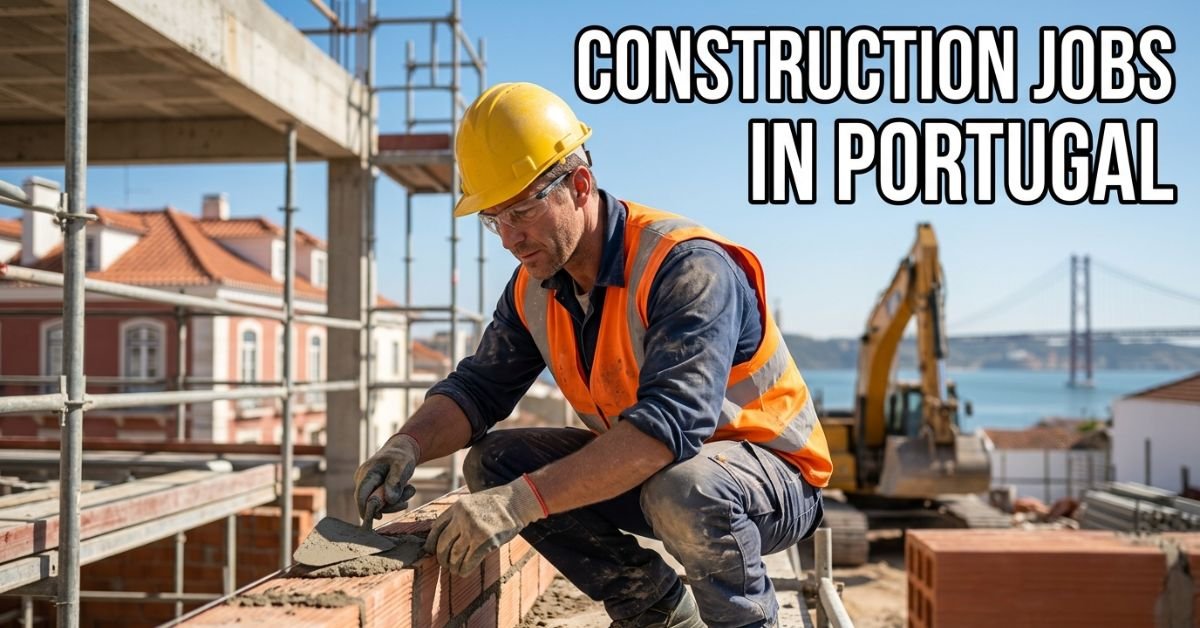
The construction industry in Portugal is currently experiencing a historic period of growth and transformation. With massive investment in housing, public transport, and infrastructure, the demand for workers has reached an all-time high.
For those looking for unskilled or less-skilled roles, the Portuguese labor market offers a welcoming environment with clear legal pathways and competitive benefits.
High Demand for Construction Laborers in Portugal
The construction sector is one of the strongest pillars of the Portuguese economy today. Local authorities and private developers are currently working on large-scale projects, including the expansion of high-speed rail networks, new airport facilities, and thousands of new public housing units. This surge in activity has created a significant labor shortage.
Industry reports suggest that the sector needs over 100,000 additional workers to meet current deadlines. Because the local workforce cannot fill all these positions, companies are looking toward international workers. For individuals with limited specialized training, this means there are plenty of entry-level positions where on-the-job training is provided.
Common Construction Roles for Unskilled Workers
You do not always need a university degree or years of technical experience to find a job in the Portuguese building sector. Many employers are specifically looking for “Ajudantes” (helpers) who are physically fit and willing to learn.
Some of the most common roles for less-skilled individuals include:
- Construction Helper (Ajudante de Construção): You will assist skilled tradespeople like masons or carpenters. Your tasks might include carrying materials, mixing cement, and keeping the workspace organized.
- Site Cleaner: Maintaining safety and order on a construction site is vital. This role involves removing debris, cleaning tools, and ensuring the site meets safety standards.
- Material Handler: This job focuses on loading and unloading delivery trucks and moving supplies to different parts of the construction site.
- Landscape Assistant: Many new residential projects require workers to help with initial ground preparation and basic landscaping around new buildings.
- Demolition Aide: Under supervision, you may help with the safe removal of old structures or clearing interior walls during renovation projects.
Salary and Benefits for Construction Workers
Portugal has recently updated its national minimum wage to ensure workers can keep up with the cost of living. For someone working in construction, the pay is often slightly higher than the national minimum because of the physical nature of the work.
Monthly Earnings and Bonuses
The current national minimum wage in mainland Portugal is €920 per month. However, in the construction industry, even an unskilled helper can expect to earn between €1,000 and €1,500 per month depending on the city and the number of hours worked.
One of the unique benefits of working in Portugal is the “14-month” payment system. Instead of 12 salaries a year, most legal contracts provide a 13th and 14th salary. These are usually paid out as a Christmas bonus and a holiday (summer) bonus.
Additional Benefits
Beyond the basic salary, many construction companies offer:
- Food Allowance (Subsídio de Alimentação): A daily amount added to your pay to cover lunch costs.
- Overtime Pay: Working extra hours is common on large projects, and these hours are paid at a higher rate.
- Social Security: Your employer pays into the Portuguese social security system, giving you access to public healthcare and future pension rights.
Understanding the Visa and Work Permit Process
The rules for moving to Portugal for work have changed recently to make the process more organized. It is no longer possible to enter as a tourist and then “legalize” your status after finding a job. You must now apply for the correct visa from your home country before you travel.
The D1 Work Visa
The D1 Visa is the standard route for people who have a job offer from a Portuguese company. This visa allows you to enter the country legally and then apply for a residence permit.
The “Green Lane” (Via Verde) for Fast-Track Hiring
Because there is such a high need for workers, the government has introduced a “Green Lane” system. If a construction job is on the “Shortage Occupations List,” the visa application is processed much faster—sometimes in as little as 20 working days. Construction roles are currently a top priority on this list.
Essential Documents
To apply for a work visa, you will generally need the following:
- A Valid Job Offer or Contract: A document from a Portuguese construction company stating they want to hire you.
- Valid Passport: Your passport should have at least six months of validity remaining.
- Clean Criminal Record: You must provide a certificate from your home country showing no prior convictions.
- Proof of Accommodation: A rental agreement or a letter from your employer stating they will provide housing.
- Health Insurance: Travel or work insurance that covers you until you are registered with the national health system.
Where to Find Jobs in Portugal
While construction work is available across the country, certain regions have a higher concentration of large projects.
- Lisbon and the Surrounding Area: As the capital, Lisbon has constant renovation and new infrastructure projects.
- Porto and the North: This region is a major industrial hub with many new residential developments.
- The Algarve: Known for tourism, this area has a high demand for workers to build and maintain resorts and luxury villas.
Top Websites for Job Seekers
You can search for “Trabalho de Construção” (construction work) or “Servente de Pedreiro” (mason’s helper) on these platforms:
- IEFP (Instituto do Emprego e Formação Profissional): The official government employment portal.
- Net-Empregos: The largest private job site in Portugal.
- Indeed Portugal: A reliable source for various manual labor roles.
- OLX Portugal: Often used by smaller local contractors to find helpers quickly.
Summary of Construction Roles and Pay
| Job Title | Skill Level Required | Estimated Monthly Salary (Gross) |
| Construction Helper | Low (No experience) | €1,000 – €1,200 |
| Site Cleaner | Low (No experience) | €920 – €1,100 |
| Mason/Bricklayer | Medium (Some experience) | €1,300 – €1,700 |
| Site Supervisor | High (Experience needed) | €1,800 – €2,500 |
| Heavy Machine Operator | Medium (License required) | €1,400 – €1,900 |
Steps to Get Started as an International Worker
If you are outside of the European Union and want to work in Portugal, follow these simple steps to ensure a smooth transition:
- Prepare Your CV: Even for unskilled jobs, having a clear CV that lists your physical strength, reliability, and any past manual work is important.
- Find a Sponsoring Employer: Apply for jobs online or through agencies. Make sure the employer is willing to provide a formal contract for your visa.
- Get Your NIF and NISS: You will eventually need a Tax Identification Number (NIF) and a Social Security Number (NISS). Some employers or legal experts can help you get these remotely.
- Apply for the Visa: Once you have the contract, book an appointment at the Portuguese embassy or consulate in your country.
- Move and Register: After arriving in Portugal, you will visit the Agency for Integration, Migration and Asylum (AIMA) to finalize your residence permit.
Living and Working in Portugal
Working in the Portuguese construction industry is more than just a job; it is a way to build a future in a safe and stable European country. While the work is physically demanding, the culture is friendly and the climate is generally pleasant.
Most sites operate on a 40-hour work week, usually starting early in the morning to avoid the afternoon heat. Learning a few basic words in Portuguese, such as “Bom dia” (Good morning) and names of common tools, will go a long way in helping you integrate with your team.
Portugal also offers a pathway to permanent residency. After five years of legal working and living in the country, you may be eligible to apply for permanent status or even citizenship, provided you meet the requirements such as a basic level of the Portuguese language.