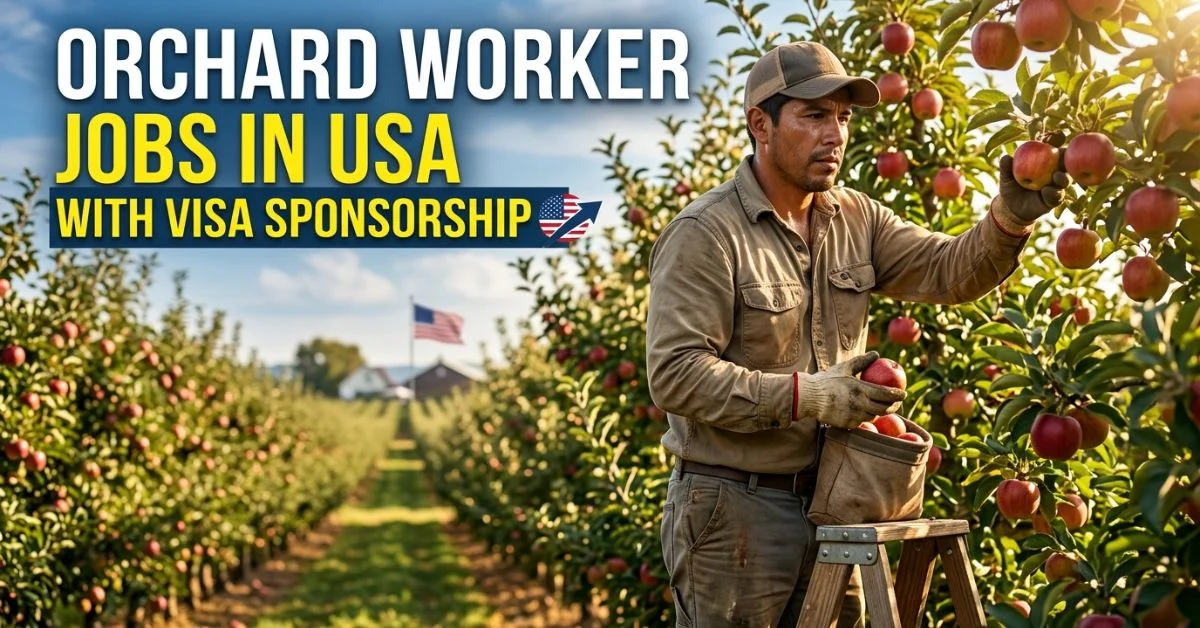
Finding a path to work in the United States is a dream for many people around the world. For those who enjoy working outdoors and do not have a college degree or high-level technical skills, orchard worker jobs are a fantastic gateway.
Many American farms and orchards face a shortage of local labor, leading them to look for workers from other countries. These positions often come with full visa sponsorship, making it possible for you to move, work, and earn a steady income legally.
The primary way workers enter the US for these roles is through the H-2A visa program. This program is specifically designed for seasonal agricultural work. Because these jobs are “unskilled,” they do not require a university degree or years of professional experience.
If you are hardworking, physically fit, and willing to learn, you are a prime candidate for these opportunities.
Understanding the Role of an Orchard Worker
An orchard worker is responsible for the care and harvest of fruit-bearing trees. These can include apple, pear, peach, cherry, and citrus orchards. The work is mostly seasonal, meaning you will be hired for a specific period, such as the pruning season or the harvest peak.
While the work is physically demanding, it is straightforward. You will be part of a team, and most employers provide on-the-job training. You do not need to arrive with expert knowledge; you just need to be ready to work.
Typical Job Duties Include:
- Fruit Picking: Carefully harvesting fruit by hand or using ladders and simple tools to ensure the crop is not bruised or damaged.
- Pruning and Trimming: Using hand tools to cut away dead or overgrown branches to help trees grow better and produce more fruit.
- Thinning: Removing some of the small, unripened fruit from a tree so the remaining fruit can grow larger and healthier.
- Tree Planting: Digging holes and planting new saplings to replace old or diseased trees.
- General Maintenance: Clearing debris from the orchard, fixing fences, and assisting with irrigation (watering) systems.
- Sorting and Packing: Moving harvested fruit to bins or packing houses where it is graded and prepared for shipping.
Requirements for Unskilled Applicants
One of the best things about orchard jobs is the low barrier to entry. Most employers are looking for reliability and physical stamina rather than a specific resume.
- Physical Fitness: You must be able to stand for long periods, walk through uneven fields, and lift heavy crates (often up to 50 pounds).
- Weather Resilience: Orchard work happens outside. You will need to work in various conditions, including heat, cold, or light rain.
- Basic Communication: While you do not need to be fluent in English, being able to understand basic instructions and safety rules is very helpful.
- No Experience Needed: Many farms offer “Skill Level I” positions, which are entry-level roles for people with 0 to 2 months of experience.
- Valid Passport: You must have a current passport from your home country to apply for the visa.
The H-2A Visa Sponsorship Process
The H-2A visa is a “non-immigrant” visa, meaning it is temporary. It allows you to stay in the US for the duration of your work contract. The most important part of this process is that the employer must start the application. You cannot apply for an H-2A visa on your own without a job offer from a US company.
How the process works:
- Job Order: The US employer posts a job locally to see if any US workers want it. If they cannot find enough local workers, they apply to the US Department of Labor.
- Labor Certification: Once the Department of Labor confirms there is a shortage, they give the employer a “Temporary Labor Certification.”
- The Petition: The employer then files Form I-129 with US Citizenship and Immigration Services (USCIS) to ask for permission to hire foreign workers.
- Worker Application: Once approved, you (the worker) apply for the visa at the US Embassy or Consulate in your home country. You will have a short interview where you show your job offer and passport.
- Travel to the US: After your visa is granted, you travel to the US to begin your contract.
Wages and Financial Benefits
Working in a US orchard is not just about the experience; it is a way to save a significant amount of money. The US government sets specific rules to make sure foreign workers are treated fairly and paid well.
- The AEWR (Adverse Effect Wage Rate): This is the minimum hourly wage an employer must pay H-2A workers. It varies by state but is almost always higher than the standard federal minimum wage.
- The Three-Fourths Guarantee: The employer must guarantee you work for at least 75% of the hours promised in your contract. Even if the harvest is slow, they must pay you for these hours.
- Free Housing: Employers are required by law to provide housing to H-2A workers at no cost. This housing must meet strict safety and health standards.
- Travel Reimbursement: Once you complete 50% of your contract, the employer must reimburse you for your travel costs from your home country to the farm. When the contract ends, they also pay for your trip back home.
- Worker’s Compensation: If you get injured on the job, the employer provides insurance that covers your medical bills and lost wages.
Top States for Orchard Employment
Orchards are located throughout the United States, but some states have much higher demands for seasonal labor. Knowing where the jobs are can help you focus your search.
| State | Primary Crops | Typical Season |
| Washington | Apples, Pears, Cherries | June to November |
| California | Peaches, Citrus, Almonds | Year-round (Multiple seasons) |
| Florida | Oranges, Grapefruit | October to June |
| Georgia | Peaches, Pecans | May to August |
| Michigan | Apples, Blueberries | July to October |
| New York | Apples, Grapes | August to October |
How to Find Legitimate Job Openings
Finding a real job offer is the most critical step. Unfortunately, there are scammers who try to charge workers for “guaranteed” visas. Remember: A legitimate US employer or recruiter will never ask you to pay for the job itself.
To find real opportunities:
- Department of Labor Portal: Use the official SeasonalJobs.dol.gov website. This is where every legal H-2A job in the US is listed. You can search for “Orchard Worker” or “Farmworker” and filter by state.
- Recognized Recruitment Agencies: Many farms use reputable agencies to find workers in countries like Mexico, Jamaica, South Africa, and others. Research agencies that have a long history of working with the H-2A program.
- Direct Farm Websites: Larger orchards often have “Careers” or “Employment” pages where they list their seasonal needs.
What to Expect During Your Stay
Living and working on a US farm is a unique experience. Most workers live in shared housing with other team members. You will have access to a kitchen to cook your own meals, or in some cases, the employer may provide meals for a small daily fee.
The days usually start early in the morning to avoid the peak afternoon heat. You will work in a group, and there is often a great sense of community among the workers. Because housing and most travel costs are covered, many workers find they can send the majority of their paycheck back home to support their families.
Final Tips for Applicants
If you are interested in this path, the first step is to get your documents in order. Ensure your passport is valid and start looking at the job listings on the official Department of Labor website. Focus on positions labeled as “No experience required” or “Entry Level” to increase your chances of being hired.
Persistence is key. Many orchards hire hundreds of workers at a time, so there are many spots to fill. If you are diligent, hardworking, and follow the legal application steps, you can secure a position that provides both a good income and a chance to see the United States.