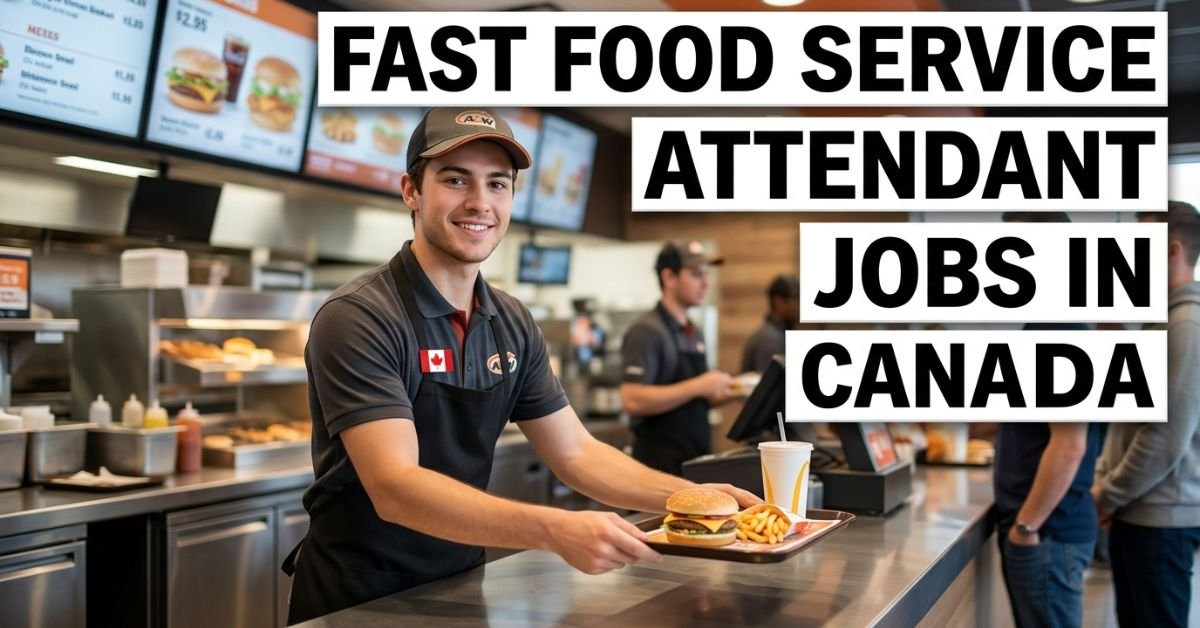
Working as a fast food service attendant is one of the most common ways to start a career in Canada. This role is often called a “front-line” position because you are the first person customers see when they walk in.
Whether you are looking for your first job, a part-time gig while studying, or a way to enter the Canadian workforce as a newcomer, this industry offers many opportunities.
The fast food sector, also known as the Quick Service Restaurant (QSR) industry, is a massive part of the Canadian economy.
These businesses rely on energetic people who can handle a fast-paced environment. Since most employers provide on-the-job training, you do not need a high level of previous experience or a university degree to get started.
What Does a Fast Food Service Attendant Do?
The job of a service attendant is varied. You aren’t just standing behind a counter; you are part of a team that makes sure the restaurant runs smoothly. Depending on the shift and the specific restaurant, your duties might change throughout the day.
Primary Responsibilities
- Taking Customer Orders: You will greet guests, listen to their food choices, and enter them into a computer system or cash register.
- Preparing Food and Drinks: This involves assembling sandwiches, wrapping burgers, and making sure fries are hot and salted. You might also use machines to make coffee, tea, or milkshakes.
- Handling Payments: You will process cash, debit, and credit card transactions. Being accurate with change is a key part of the job.
- Cleaning and Sanitation: Keeping the dining area, counters, and kitchen clean is a top priority. This includes mopping floors, wiping tables, and taking out the trash.
- Stocking Supplies: You will make sure that napkins, straws, and condiment packets are always available for customers.
- Answering Questions: Customers may ask about ingredients or special deals. Being helpful and polite is essential.
Requirements for the Role
One of the best things about this job is that the “barrier to entry” is very low. This means almost anyone with a positive attitude can apply.
Education and Experience
In most cases, there are no formal education requirements. Some employers prefer that you have completed or are currently in high school, but many will hire you regardless of your schooling level. Previous experience in a kitchen or retail store is a “nice to have,” but it is rarely mandatory. The restaurant will usually train you on how to use their specific equipment and follow their recipes.
Important Soft Skills
Because you are working with the public, “soft skills” are more important than technical ones.
- Communication: You need to speak clearly so customers and coworkers can understand you.
- Teamwork: You will be working in a small space with many other people. Getting along and helping each other is vital.
- Punctuality: Showing up on time for your shift is one of the most important rules in the food industry.
- Physical Stamina: You will be on your feet for several hours and may need to lift boxes of supplies.
Compensation and Wages Across Provinces
Wages for fast food workers in Canada are usually tied to the provincial minimum wage. However, many employers pay slightly above the minimum to attract reliable staff. The federal government also sets a minimum wage for workers in certain industries, which often acts as a benchmark.
The following table shows the typical hourly rates you can expect in different parts of the country based on the latest standards.
Average Hourly Wage Estimates by Province
| Province / Territory | Estimated Hourly Starting Wage |
| Alberta | $15.00 – $16.00 |
| British Columbia | $17.85 – $18.25 |
| Ontario | $17.60 – $18.00 |
| Quebec | $16.10 – $16.60 |
| Nova Scotia | $16.50 – $17.00 |
| Manitoba | $16.00 – $16.50 |
| Saskatchewan | $15.35 – $16.00 |
| Federal Minimum Wage | $17.75 – $18.15 |
Note: These rates can vary depending on your specific city and whether you work night shifts, which sometimes pay a small “premium” or extra amount per hour.
Top Employers in Canada
Canada has several major fast food chains that are almost always hiring. These companies have established training programs that are very helpful for unskilled workers.
- Tim Hortons: Often called “Timmies,” this is Canada’s most famous coffee and donut chain. They have thousands of locations.
- McDonald’s: Known for having one of the best training systems in the world. They offer flexible hours for students and newcomers.
- A&W: A popular burger chain that focuses on high-quality ingredients and has a strong presence across the country.
- Subway: This is a great place to work if you prefer “sandwich artistry” over working with deep fryers or grills.
- Pizza Hut and Domino’s: These roles often involve both counter service and food preparation, focusing heavily on speed and accuracy.
Benefits of Working in Fast Food
While these are often considered “entry-level” jobs, they come with perks that go beyond the hourly paycheck.
- Flexible Scheduling: Most restaurants offer morning, afternoon, evening, and overnight shifts. This makes it easy to balance work with family or school.
- Free or Discounted Meals: You can save a lot of money on food by eating during your shift at a reduced price or even for free.
- Career Growth: Many restaurant managers started as counter attendants. If you show dedication, you can quickly move up to a “Shift Lead” or “Supervisor” position.
- Networking: You will meet many people from different backgrounds, which is a great way to make friends in a new community.
Information for International Applicants
If you are not currently in Canada, you may still be able to find work in this sector. Some Canadian employers use the Temporary Foreign Worker Program to fill positions when they cannot find local workers.
The LMIA Process
To hire a worker from outside the country, an employer often needs a Labour Market Impact Assessment (LMIA). This is a document from the government that says the employer is allowed to hire a foreign worker.
- Many fast food jobs fall under the “low-wage” stream of the LMIA.
- Once an employer has a “positive LMIA,” they can give you a job offer.
- You then use that job offer to apply for a Work Permit.
The best place to find these specific jobs is the Canada Job Bank. You can use filters to search for “Employers who have an LMIA” or “Temporary Foreign Workers.”
How to Apply Successfully
Applying for a fast food job is usually straightforward. You can apply in person or online.
- Prepare a Simple Resume: List any school you attended and any previous work (even if it wasn’t in a restaurant). Make sure your phone number and email are correct.
- Apply Online: Visit the official websites of companies like McDonald’s or Tim Hortons and go to their “Careers” section.
- Visit in Person: Sometimes, walking into a restaurant during a quiet time (like 2:00 PM) and asking to speak with the manager can work well. Dress neatly and bring a printed resume.
- Prepare for a Brief Interview: The manager will likely ask if you are comfortable working in a busy environment and what your availability is. Be honest about when you can work.
Working as a fast food service attendant provides a steady income and teaches you valuable skills like time management and customer service. It is a solid foundation for your future in Canada.