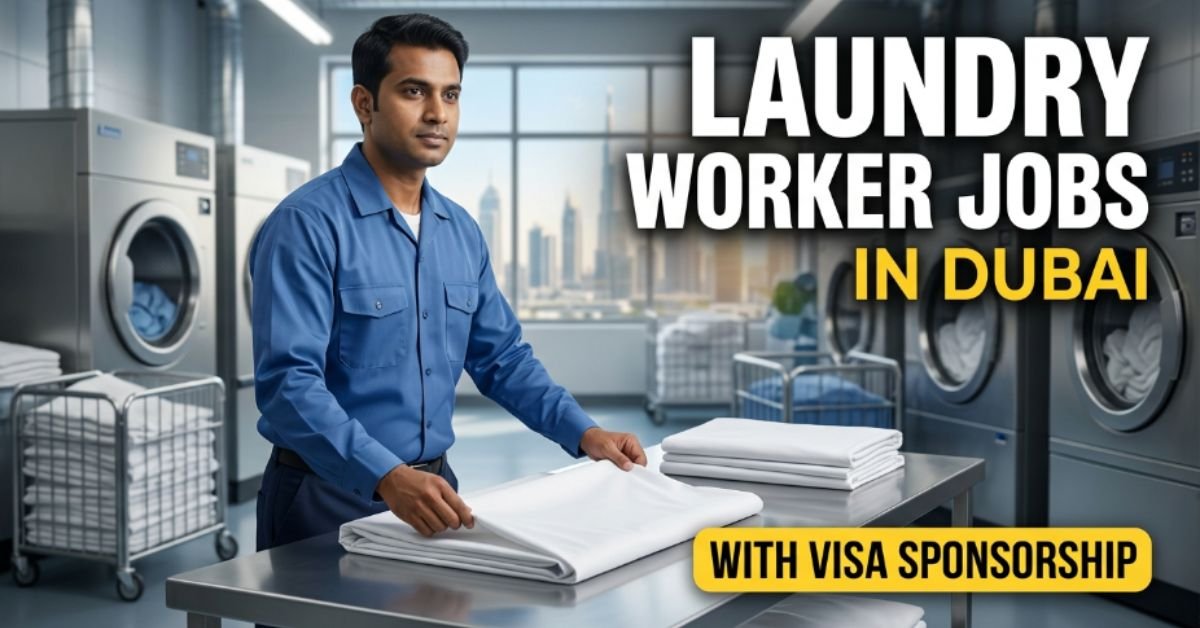
Dubai is a busy city with thousands of hotels, hospitals, and large companies. Because the city is always growing, there is a constant demand for workers to handle everyday tasks. One of the most reliable options for individuals seeking entry-level, unskilled, or semi-skilled employment is a laundry worker position.
Many businesses in Dubai hire foreign laborers and offer full visa sponsorship. This means the employer pays for your entry permit, work visa, and residency paperwork, allowing you to move and work legally in the United Arab Emirates (UAE). For people with limited education or formal experience, these roles provide a practical way to support families back home through steady income and shared benefits.
Core Responsibilities of a Laundry Worker
Working in a commercial laundry facility or a hotel guest services department involves straightforward physical tasks. You do not need complex computer skills or advanced training to do this job well. The work centers on keeping clothes, linens, sheets, and towels clean and organized.
- Sorting Items: Separating dark clothes from light clothes, and dividing delicate garments from heavy bedding or towels.
- Operating Machines: Loading clothes into large industrial washing machines and dryers, and choosing the right pre-set buttons for washing or drying.
- Ironing and Pressing: Using big steam pressing machines or standard hand irons to smooth out wrinkles from sheets, uniforms, and shirts.
- Folding and Packing: Neatly folding clean linens and placing them into clean delivery bags or carts so they can be sent back to hotel rooms or customers.
- Checking for Stains: Looking closely at fabrics to ensure all dirt is gone before packing them. If a stain remains, you pass it back for extra cleaning.
Standard Requirements for Applicants
Employers looking for laundry staff do not expect high-level university degrees. However, because the UAE relies on a massive diverse workforce from countries like India, Pakistan, Bangladesh, the Philippines, and Nepal (Elbarazi et al., 2022), simple communication is necessary.
- Education: A high school diploma or a basic school leaving certificate is usually enough. Many companies accept workers who can read simple instructions (Elbarazi et al., 2022).
- Language: You should understand and speak basic English. You need to read labels on clothes and follow instructions from your supervisor.
- Physical Fitness: This job requires standing up for many hours during a shift. You will also lift bundles of wet or dry laundry, which can be heavy.
- Age Limits: Most companies look for workers between the ages of 18 and 40 who have the stamina for manual labor.
Understanding Visa Sponsorship and Benefits
Under the UAE legal framework, the Kafala system requires an employer to act as your official legal sponsor while you live and work in the country (Malit, Jr. et al., 2018). Legitimate companies in Dubai will handle the visa application process on your behalf and cover the government processing fees.
A standard legal job offer package for an unskilled or less-skilled laundry worker generally includes specific mandatory benefits alongside the monthly wage (Malit, Jr. et al., 2018).
| Benefit Type | What the Employer Provides |
| Employment Visa | Free entry permit and residency visa stamping. |
| Accommodation | Shared room in a company labor camp or staff building. |
| Transportation | Free bus transport from the staff accommodation to the workplace. |
| Medical Insurance | A basic health card to cover doctor visits and emergencies. |
| Flight Ticket | An initial plane ticket from your home country, plus a return ticket after finishing your contract. |
Average Salary Expectations
Wages for laundry attendants and pressers in Dubai vary based on the size of the employer. Large five-star hotels or international healthcare facilities tend to pay slightly more than small, neighborhood dry-cleaning shops.
A large portion of the migrant workforce in cleaning and laundry sectors earns basic salaries within entry-level brackets (Elbarazi et al., 2022). For less-skilled positions, the monthly cash wage usually ranges from AED 1,000 to AED 1,500. While this amount may seem modest, remember that your major living costs—such as rent, electricity, water, and daily transport—are fully paid for by the employer. This allows you to send most of your monthly cash earnings back to your home country as remittances (Amjad, 2014).
Step-by-Step Process to Find Legitimate Jobs
To avoid scams and find a real job with visa sponsorship, you must follow official channels. Never pay large amounts of money to unverified agents who promise fake visas.
Step 1: Prepare a Clean CV
Create a short, simple resume (CV). Write your full name, contact information, nationality, language skills, and any physical work you have done before, such as farming, factory work, or cleaning.
Step 2: Search Official Job Websites
Look for job openings on popular UAE job sites like Indeed Gulf, Dubizzle, or LinkedIn. Use search phrases like “laundry attendant,” “laundry helper,” or “ironing worker in Dubai.” Look specifically for descriptions that state “visa provided” or “accommodation included.”
Step 3: Check Approved Recruitment Agencies
If you use an agency in your home country, ensure they are registered and licensed by your local government to send workers to the UAE. Licensed agencies have legal contracts with real Dubai companies.
Step 4: Complete the Interview
Many Dubai employers hold interview walks or online video interviews. They will ask if you can work long hours, stand for long periods, and follow basic commands in English. Show that you are hardworking, polite, and ready to learn.
Step 5: Receive and Sign the Offer Letter
Once selected, the company will send an official Ministry of Human Resources and Emiratisation (MOHRE) offer letter. This document outlines your exact salary, working hours, and benefits. Read it carefully, or ask a trusted friend to translate it for you, before signing.
Key Points to Remember for Workplace Safety
Working in a commercial laundry means dealing with large machines, high heat, and industrial detergents. Employers provide safety training, but you must remain cautious. Always wear the protective gloves or non-slip shoes given to you by the company to prevent accidental slips or chemical burns on your skin. If a machine looks broken or makes a strange noise, do not try to fix it yourself; report it immediately to your supervisor.