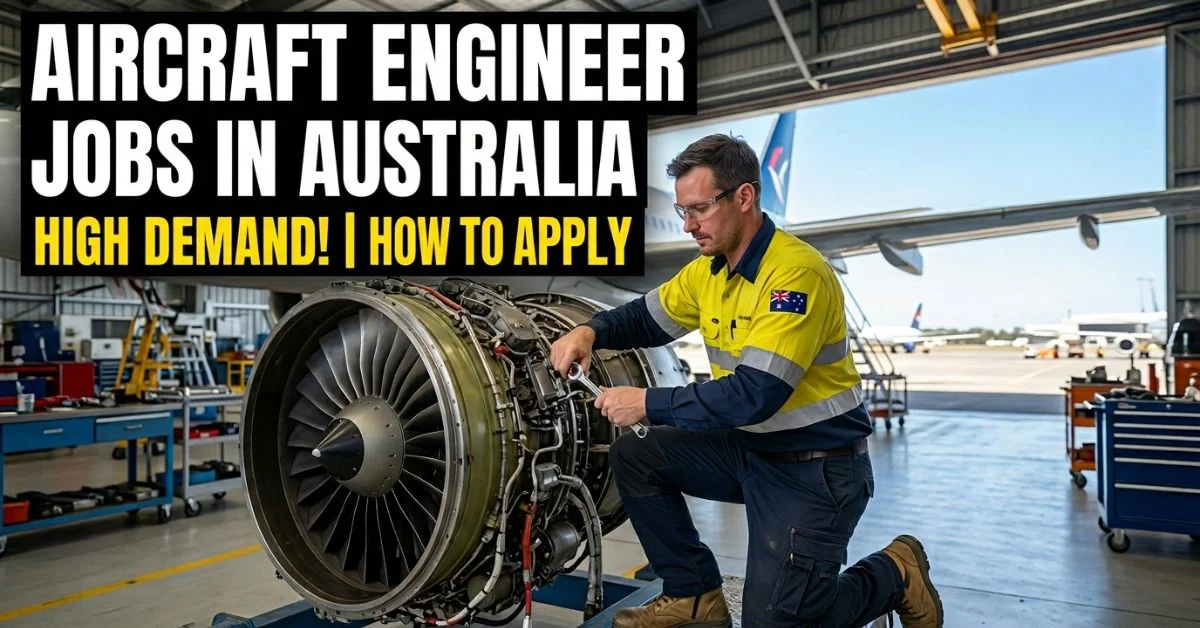
If you have ever looked up at a plane and wondered how such a massive machine stays safe in the sky, you are thinking about the work of an Aircraft Maintenance Engineer (AME). Australia is currently seeing a significant rise in the need for people to look after its growing fleet of aircraft.
This field is perfect for those who like working with their hands and want a job that offers stability and good pay. Even if you have no previous experience or high-level technical skills, there are clear paths to help you enter this exciting industry.
Understanding the Role of an Aircraft Maintenance Engineer
An Aircraft Maintenance Engineer is essentially a highly specialized mechanic for planes and helicopters. Their primary job is to ensure every part of an aircraft is functioning perfectly before it leaves the ground. This involves conducting regular inspections, repairing engines, fixing electrical systems, and replacing worn-out parts.
Safety is the most important part of this job. Because people’s lives depend on the quality of the work, every task is done following very strict rules. It is a career built on precision and following instructions carefully. For someone who enjoys problem-solving and seeing how things work, it is a very rewarding way to make a living.
Breaking Into the Industry Without Previous Skills
One of the best things about the aviation sector in Australia is that you do not need to be an expert to get started. The industry is designed to take “unskilled” individuals and turn them into professionals through structured learning programs.
Apprenticeships and Traineeships
The most common way for a beginner to start is through an apprenticeship. This is a “earn while you learn” system. You get hired by an airline or a maintenance company and spend about four years learning the trade. During this time, you work on real planes under the supervision of experienced engineers while also attending classes to get your formal qualifications.
Entry-Level Certificates
If you want to gain some basic knowledge before looking for a job, you can enroll in a Certificate II in Aircraft Line Maintenance. This is a shorter course that introduces you to the tools, safety procedures, and basic mechanical tasks used in hangars. Having this certificate can make your resume look much better to employers who are looking for new apprentices.
Key Categories of Aircraft Maintenance
In the world of aviation engineering, most people choose a specific area to focus on. Understanding these categories helps you decide which path fits your interests best.
- Mechanical (Category B1): This focuses on the “heavy” parts of the plane. You will work on engines, landing gear, hydraulic systems, and the main structure of the aircraft. It is a very hands-on role involving a lot of tools and physical work.
- Avionics (Category B2): This is for people who like electronics. You will look after the flight computers, navigation systems, radar, and communication equipment. As planes become more advanced, this area is growing very quickly.
- Structures: These specialists focus specifically on the “skin” and frame of the plane. They deal with metals and composite materials to ensure the plane remains strong and aerodynamic.
Basic Requirements for New Applicants
You do not need a university degree to become an Aircraft Maintenance Engineer. However, there are a few basic things that employers look for when hiring new people for entry-level roles.
- High School Completion: Most companies prefer that you have finished Year 10 or Year 12. Having a basic understanding of math and science is helpful because you will need to perform calculations and understand physical principles.
- Mechanical Aptitude: You should enjoy taking things apart and putting them back together. If you have ever worked on a car, a bike, or even simple home repairs, you likely have the “knack” for this job.
- Physical Health: The job can be demanding. You might need to climb ladders, crawl into tight spaces inside the plane, or lift heavy equipment. Good eyesight (with or without glasses) and the ability to distinguish colors are also usually required.
- Attention to Detail: In aviation, there is no room for “almost right.” You must be the kind of person who double-checks their work and follows checklists to the letter.
Salary and Career Growth in Australia
The financial rewards in this industry are quite high compared to many other trades. As a beginner apprentice, your starting salary will be lower, but it increases every year as you gain more skills. Once you become a fully Licensed Aircraft Maintenance Engineer (LAME), your earning potential jumps significantly.
Many engineers in Australia earn between $90,000 and $110,000 per year. If you work in remote areas like Western Australia or the Northern Territory, or if you take on overtime and night shifts, your pay can go even higher. Beyond the money, many airlines offer “staff travel” benefits, which allow you and your family to fly at a fraction of the normal cost.
Career Progression Comparison Table
| Career Stage | Typical Role | Primary Tasks | Experience Needed |
| Entry Level | Apprentice / Trainee | Assisting seniors, cleaning parts, basic repairs | None (High School Grad) |
| Intermediate | Unlicensed AME | Performing repairs under supervision | 3–4 Years |
| Professional | Licensed Engineer (LAME) | Signing off on work, supervising teams | 5+ Years & Exams |
| Senior Level | Maintenance Manager | Planning schedules, managing the hangar | 10+ Years |
Where to Find Employment
Australia has several major hubs where aircraft maintenance is always happening. Most jobs are located near large airports in cities like Brisbane, Sydney, Melbourne, and Perth. However, there are also many opportunities in regional areas.
- Commercial Airlines: Companies like Qantas, Virgin Australia, and Jetstar have large maintenance bases. They often run their own apprenticeship programs once or twice a year.
- Regional Carriers: Airlines like Rex or those serving the mining industry need engineers to keep their smaller planes running safely.
- General Aviation: This includes small flight schools, private jet companies, and emergency services like the Royal Flying Doctor Service.
- Defense Contractors: Companies like Boeing or Lockheed Martin often hire civilian engineers to help maintain military aircraft.
Tips for International Applicants
Australia often looks for skilled workers from overseas to fill gaps in its aviation workforce. If you already have some experience from your home country, you might be eligible for a “Skilled Migration” visa.
For those with no experience who want to move to Australia to learn, the “Training Visa” (Subclass 407) is a common path. This allows you to take part in a structured workplace-based training program. You will need to show that you have a genuine interest in the field and a basic level of English.
Summary of the Path Forward
Starting a career in aircraft maintenance is a journey of continuous learning. It begins with a simple interest in machines and grows into a high-paying, respected profession. The industry is currently very welcoming to new faces, making it the perfect time to apply for an apprenticeship or start a basic training course.
If you enjoy a job where every day is different and you get to work on some of the most advanced technology in the world, this is the right field for you. The combination of high demand, great pay, and the pride of keeping the skies safe makes it one of the best trade careers in Australia today.