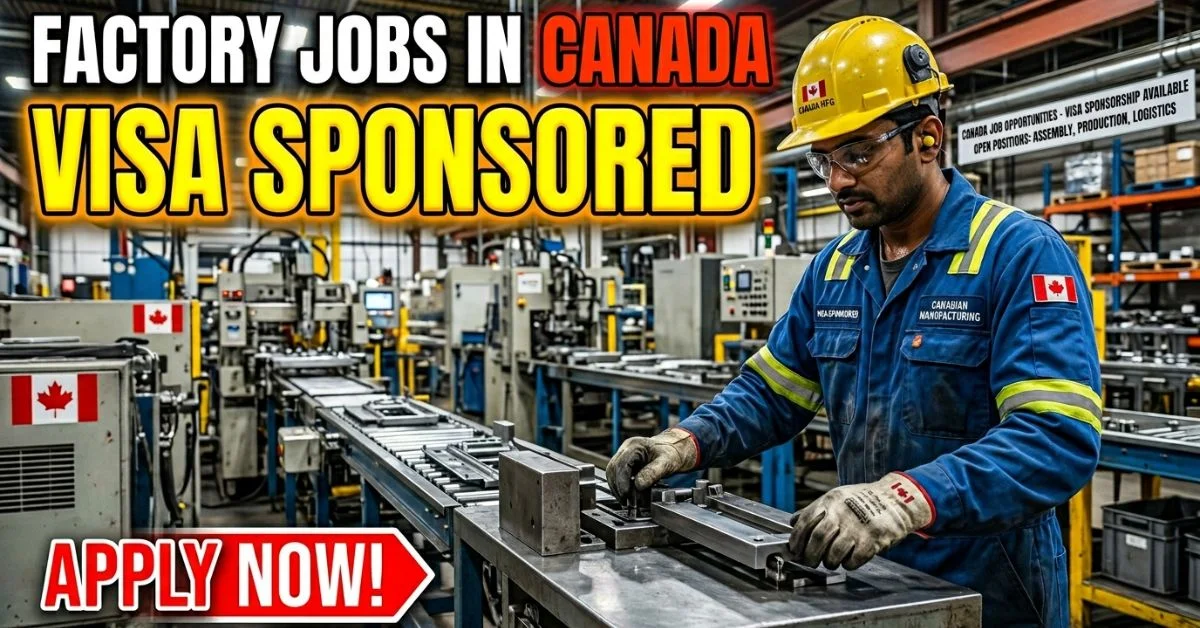
Canada continues to face a significant labor shortage in its industrial and manufacturing sectors. Many factories across the country struggle to find enough local workers to keep production lines running at full capacity.
To solve this problem, the Canadian government allows employers to hire international workers through various immigration programs. This creates a massive opportunity for people from other countries to secure factory jobs that come with visa sponsorship.
Factory work in Canada is highly regarded because it offers stable hours, fair wages, and a safe working environment. For many unskilled or less skilled individuals, these positions serve as a gateway to a new life in North America.
These roles do not usually require a university degree or specialized technical training, making them accessible to a wide range of applicants.
Understanding Visa Sponsorship and the LMIA Process
When a Canadian factory wants to hire a worker from outside Canada, they usually must follow a specific legal process. The most important document in this process is the Labour Market Impact Assessment, commonly known as an LMIA. A positive LMIA proves that the employer tried to find a Canadian citizen or permanent resident for the job but was unsuccessful.
Once a factory obtains a positive LMIA, they can provide a job offer letter to a foreign candidate. This letter, along with the LMIA, allows the worker to apply for a work permit. This is what people mean by “visa sponsorship.” The employer essentially sponsors your right to work in the country by proving your skills are needed to support the Canadian economy.
Popular Entry Level Factory Roles for International Workers
The Canadian manufacturing landscape is diverse. Factories ranging from food production to automotive parts assembly are constantly looking for dependable staff. Here are some of the most common roles available for unskilled or less skilled workers:
- Food Processing Laborers: These workers help in meat-packing plants, vegetable processing units, and bakeries. Tasks include cleaning, packaging, and moving raw materials.
- Assembly Line Workers: In these roles, you put together different parts of a product. This could involve electronics, furniture, or plastic goods.
- Material Handlers: These individuals are responsible for moving stock within the factory. They load and unload trucks and organize inventory in warehouses.
- Quality Control Inspectors: While this sounds technical, entry-level versions of this job simply involve checking products for visible defects before they are boxed.
- Machine Operators: Many factories use automated machines. Workers are needed to start the machines, monitor their performance, and report any errors.
Typical Wages and Benefits in the Factory Sector
Salaries for factory workers in Canada are competitive and usually start above the minimum wage of the specific province. Workers are also entitled to overtime pay if they work more than the standard 40 hours per week.
| Job Title | Estimated Hourly Wage (CAD) | Typical Education Required |
| General Laborer | $16 – $20 | High School Diploma |
| Food Packager | $15 – $19 | None / Basic |
| Assembly Line Worker | $17 – $22 | On-the-job training |
| Warehouse Worker | $18 – $23 | Basic Literacy |
| Machine Operator | $20 – $25 | Vocational Training |
Beyond the hourly pay, many sponsored factory jobs include benefits such as health insurance, dental coverage, and paid vacation time. In some cases, employers in remote areas may even offer subsidized housing or transportation assistance for their international staff.
Key Requirements for Unskilled Factory Jobs
While you do not need a high-level degree, there are still basic requirements you must meet to be eligible for a sponsored work permit in Canada. Employers look for reliability and physical fitness.
- Language Proficiency: You should be able to speak and understand basic English or French. This is crucial for safety reasons so that you can follow instructions and read warning signs.
- Education: A high school diploma is usually the maximum required. Many jobs do not even ask for this if you have relevant work experience.
- Physical Health: Factory work can be demanding. You may need to stand for long periods or lift boxes weighing up to 20 kilograms.
- Clean Record: You must provide a police clearance certificate from your home country to prove you have no criminal history.
- Valid Passport: You must have a passport that is valid for at least six months beyond your intended stay.
Best Provinces to Find Sponsored Factory Work
Some regions in Canada have a higher demand for factory labor than others. Focusing your job search on these provinces can increase your chances of finding an employer willing to provide visa sponsorship.
- Ontario: As the industrial heart of Canada, Ontario has thousands of factories involved in car manufacturing, food processing, and chemical production.
- Quebec: This province has a massive aerospace and textile industry. Note that basic French is often more important here.
- Alberta: Known for oil and gas, Alberta also has a large food manufacturing sector, particularly in meat processing.
- Manitoba and Saskatchewan: These provinces have many agricultural and food-related factory jobs. They often have easier provincial pathways for workers to stay permanently.
How to Find and Apply for These Jobs
Finding an employer who offers sponsorship requires patience and the right strategy. You should focus on platforms that are recognized by the Canadian government.
- Job Bank Canada: This is the official government website. Look for jobs that have a symbol or note stating that “the employer has an approved LMIA” or is “open to international candidates.”
- Indeed and LinkedIn: Use keywords like “LMIA,” “Visa Sponsorship,” or “Foreign Worker” in the search bar along with “Factory” or “General Labor.”
- Recruitment Agencies: Some agencies specialize in bringing foreign workers to Canada for industrial roles. Always verify that an agency is licensed before giving them any personal information.
- Direct Company Websites: Large companies like Maple Leaf Foods or various automotive suppliers often have “Careers” pages where they list international hiring programs.
Steps to Secure Your Work Permit
Once you find an employer and pass the interview, the formal immigration process begins. It is important to follow these steps carefully to avoid delays.
- Receive the Job Offer: Ensure the offer is in writing and clearly states your wages, hours, and duties.
- The Employer Applies for LMIA: Your employer submits an application to Service Canada. This can take several weeks or months.
- Apply for the Work Permit: Once the LMIA is approved, you use the LMIA number and your job offer to apply for a work permit through Immigration, Refugees and Citizenship Canada (IRCC).
- Biometrics and Medical Exam: You will likely be asked to give your fingerprints and undergo a health check-up by an approved doctor.
- Visa Approval: If successful, you will receive a Letter of Introduction. You present this at the Canadian border to receive your physical work permit.
Tips for a Successful Application
Competition for these roles can be high because people from all over the world apply. To stand out, keep your resume simple and clear. Focus on your work ethic and any previous experience you have in physical labor or warehouse settings. Ensure your contact information is correct and that you respond to emails quickly.
Employers value honesty and punctuality. During an interview, emphasize that you are willing to learn and that you are committed to following safety protocols. Showing that you have researched the company and the specific town where they are located also shows you are serious about moving to Canada.
Moving Toward Permanent Residency
One of the greatest advantages of working in a Canadian factory is that it can lead to permanent residency (PR). Programs like the Provincial Nominee Program (PNP) or the Canadian Experience Class (CEC) often reward people who have worked in Canada for at least one year.
While you start as a temporary worker, your time in the factory builds the “Canadian experience” needed to apply for a life-long stay in the country.