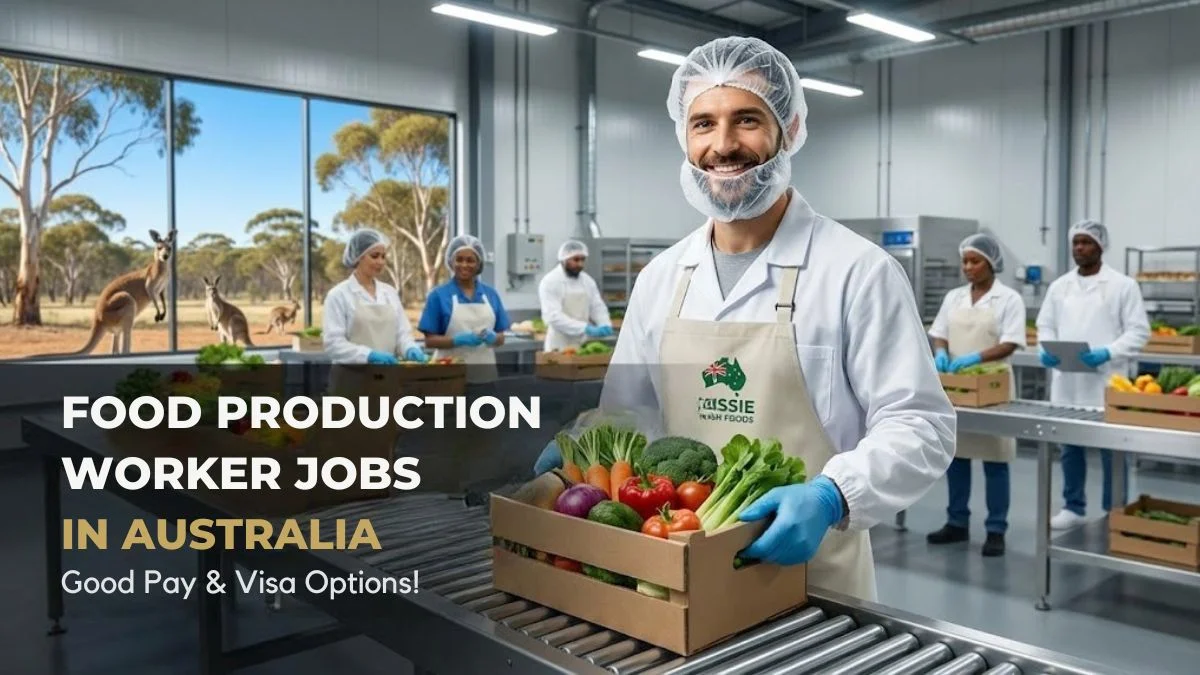
Food production worker jobs in Australia offer a practical way for people from other countries to find steady work, especially if you have little or no experience.
These roles involve helping make, pack, and prepare food items like meat, dairy, fruits, vegetables, baked goods, and ready meals in factories or processing plants.
Many of these jobs suit beginners because they focus on simple tasks rather than advanced skills or degrees. Australia faces ongoing needs in food manufacturing and related areas due to industry growth and workforce gaps in some regions.
This creates real openings for international workers who follow the right steps.
What Does a Food Production Worker Do?
In these jobs, you handle everyday tasks in clean, organized factory settings. Common duties include:
- Sorting and cleaning raw food items like fruits, vegetables, or meat.
- Operating basic machines for cutting, mixing, or packaging.
- Packing finished products into boxes or bags and labeling them.
- Checking quality to ensure items meet standards.
- Keeping work areas clean and safe.
- Working on production lines, often in teams.
Shifts can be full-time, part-time, or casual, with options for day, evening, or night work. Many factories provide training on the job, so you learn as you go. The work is physical but straightforward, with breaks and safety rules in place.
Why These Jobs Appeal to Foreign Workers
Food production roles stand out for several reasons:
- Low entry barriers – No need for high education or years of experience.
- Steady demand – Food is always needed, so jobs stay available year-round.
- Fair pay – Wages follow Australia’s minimum standards, often with overtime or shift bonuses.
- Extra perks – Some employers offer benefits like meal allowances, product discounts, or help with transport.
These positions help fill important spots in Australia’s food supply chain, supporting local communities and exports.
Visa Options for Working in Food Production
To work legally, you need a visa that allows employment. Here are the main paths for foreigners in these roles:
- Working Holiday Visa (Subclass 417 or 462): Ideal for younger people (usually up to 30 or 35, depending on your country). It lets you work and travel for up to one year, with possible extensions if you do regional work like food processing or agriculture. Many use this for factory or packing jobs.
- Pacific Australia Labour Mobility (PALM) Scheme: For workers from specific Pacific Islands and Timor-Leste. It covers unskilled and low-skilled roles in agriculture, food processing, and related areas, with stays from short-term to several years.
- Temporary Skill Shortage Visa (Subclass 482): Employers can sponsor you if they can’t find local workers. This suits some food manufacturing roles, especially in regional areas, and may lead to longer stays.
- Other pathways: In certain cases, labour agreements or regional programs help with sponsorship for ongoing needs in food sectors.
Check the official Australian government site (immi.homeaffairs.gov.au) for your country’s eligibility, as rules vary. You must meet health, character, and English requirements in most cases. Employers who sponsor handle much of the paperwork.
Pay and Working Conditions
Pay starts from the national minimum wage, which is around AUD 24 per hour (as of recent updates), but many roles pay more with penalties for weekends, nights, or overtime. Annual earnings can range from AUD 45,000 to 60,000 or higher with extra hours.
Conditions include:
- Safe workplaces with training on equipment and hygiene.
- Paid leave, superannuation (retirement savings), and workers’ rights.
- Protection under Australian laws for all workers, including foreigners.
Always confirm details with Fair Work Ombudsman for your rights.
How to Find and Apply for These Jobs
Start your search on reliable sites:
- SEEK.com.au
- Indeed.com.au
- Jora.com.au
- Workforce Australia jobs board
Look for keywords like “food production,” “process worker,” “factory hand,” “packing,” or “manufacturing.” Regional areas like Victoria, New South Wales, Queensland, South Australia, and Tasmania often have more openings in food processing.
Steps to apply:
- Update your resume with any related experience (even basic work counts).
- Write a short cover letter showing your willingness to learn and work hard.
- Apply online and follow up if possible.
- Prepare for interviews – often simple questions about reliability and teamwork.
- Get your visa sorted before starting.
Some roles list visa sponsorship directly. Be patient, as the process takes time.
Key Tips for Success
- Learn basic English for safety instructions and team communication.
- Stay fit for physical tasks like lifting or standing long hours.
- Follow hygiene rules strictly in food handling.
- Build good habits like punctuality to open doors for better shifts or extensions.
These jobs provide a real start in Australia, with chances to gain skills and enjoy the country’s lifestyle.
Simple Overview Table: Common Visa Paths for Food Production Roles
| Visa Type | Who It’s For | Duration | Key Features |
|---|---|---|---|
| Working Holiday (417/462) | Young people from eligible countries | Up to 1 year (extendable) | Flexible work, travel allowed |
| PALM Scheme | Pacific Islands & Timor-Leste workers | Short to multi-year | Focus on agriculture/food processing |
| TSS Subclass 482 | Sponsored by employer | Up to 4 years | Possible pathway to longer stay |
FAQs
Can I get a food production job in Australia without experience?
Yes, many entry-level roles provide on-the-job training and welcome beginners who are reliable and eager to work.
What visa is easiest for unskilled workers in food processing?
The Working Holiday Visa or PALM Scheme often works best for starters, depending on your nationality, while employer sponsorship helps for longer roles.
Do these jobs offer any benefits beyond pay?
Many include overtime pay, shift allowances, meal discounts, and safe working conditions under Australian laws.