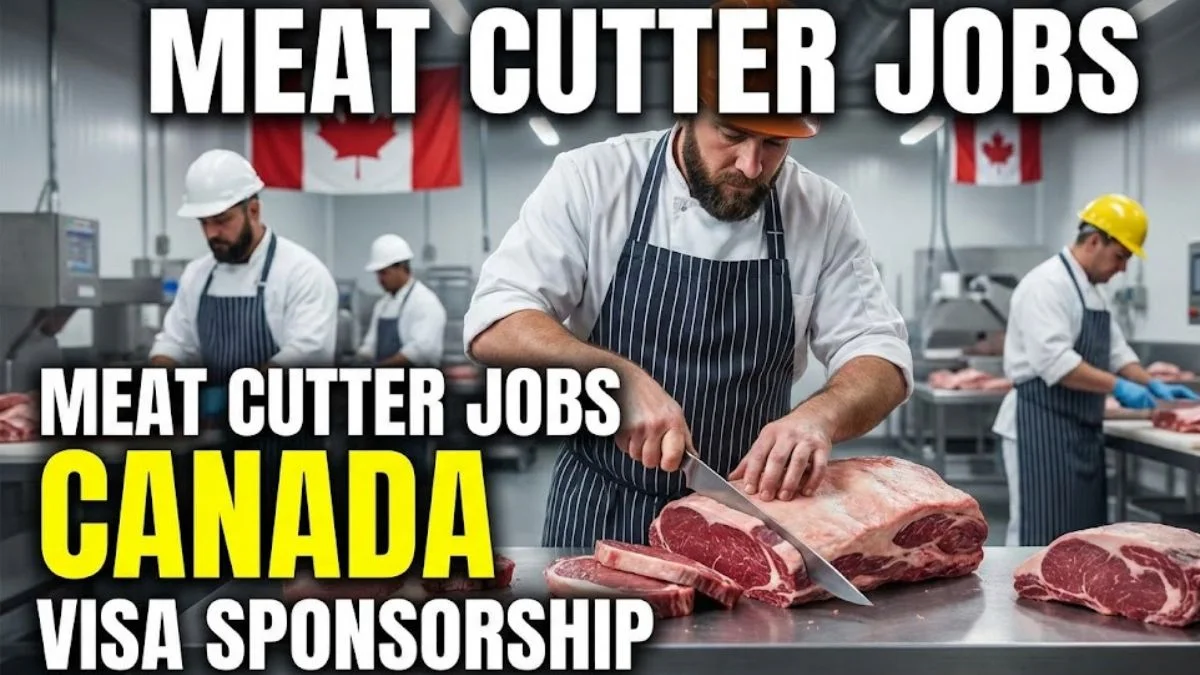
Meat cutter jobs in Canada involve cutting, trimming, and preparing meat for sale or further processing. These roles exist in retail stores, supermarkets, and industrial meat plants. Many employers offer visa sponsorship to fill labor shortages, especially for workers with some experience.
Why Meat Cutter Jobs Are in Demand in Canada
Canada’s meat processing industry faces ongoing labor shortages. Provinces like Alberta, Manitoba, and Ontario have high needs due to large meat production facilities. Employers often hire foreign workers through programs that allow visa sponsorship.
Key reasons for demand include:
- Growing food export market for beef and pork.
- Retiring local workforce creating openings.
- Need for workers in both retail and industrial settings.
These jobs provide stable employment in the food sector.
Types of Meat Cutter Jobs Available
Meat cutters work in different settings:
- Retail Meat Cutters: Prepare meat in grocery stores or butcher shops for customers. They cut portions, package products, and ensure quality.
- Industrial Meat Cutters: Work in meat packing plants on production lines. They handle larger volumes, including deboning and trimming.
Both types may qualify for visa sponsorship if the employer obtains approval.
Job Requirements and Qualifications
Most meat cutter jobs require basic skills that many can learn or already have from similar work.
Common requirements include:
- At least 1 year of experience in meat cutting or butchery (preferred by many employers).
- Physical ability to stand for long periods and lift heavy items.
- Knowledge of food safety and hygiene standards.
- High school education or equivalent (often sufficient).
On-the-job training is common, especially for entry-level roles. No advanced degree is needed.
Here is a simple table of common qualifications:
| Qualification | Details |
|---|---|
| Experience | 1–2 years in meat cutting preferred |
| Education | High school or equivalent |
| Physical Fitness | Able to lift 50 lbs and stand long hours |
| Skills | Knife handling, food safety knowledge |
| Language | Basic English or French |
Salary and Benefits for Meat Cutters
Wages vary by location, experience, and job type.
- Hourly pay often ranges from CAD 15 to CAD 25.
- Full-time roles may include benefits like health insurance and paid leave.
- Some positions offer overtime pay in busy plants.
Higher pay is common in high-demand areas like Manitoba or Alberta.
Visa Sponsorship Options for Foreign Workers
Some Canadian employers sponsor visas for meat cutters through the Temporary Foreign Worker Program (TFWP).
How it works:
- Employer applies for a Labour Market Impact Assessment (LMIA) to prove they need a foreign worker.
- If approved, the worker gets a job offer and applies for a work permit.
- Roles in meat processing may lead to permanent residency pathways.
Provincial Nominee Programs (PNPs) in provinces like Manitoba or Alberta also nominate workers in these jobs.
Note: The Agri-Food Pilot, which helped meat processing workers, ended in May 2026.
How to Find and Apply for These Jobs
Follow these steps to search for opportunities:
- Check job sites like Indeed.ca or Job Bank (jobbank.gc.ca) using terms like “meat cutter visa sponsorship” or “butcher LMIA”.
- Look for postings from companies in meat processing.
- Prepare a simple resume highlighting any related experience.
- Apply directly and mention interest in sponsorship.
- Be ready for interviews, possibly showing basic skills.
Many listings require relocation to Canada.
Provinces with High Opportunities
Opportunities are strongest in:
- Alberta (e.g., meat plants in Brooks or Calgary area).
- Manitoba (e.g., Brandon facilities).
- Ontario (retail and processing roles).
Rural areas often have more sponsorship options due to local shortages.
Tips for Success as a New Worker
- Learn basic Canadian food safety rules.
- Be reliable and willing to work shifts.
- Improve English skills for better communication.
- Stay physically fit for the demands of the job.
These jobs offer a chance to build a stable life in Canada with hard work.
Frequently Asked Questions
Do meat cutter jobs in Canada require high education?
No, most need only high school or equivalent, plus some experience or on-the-job training.
Can beginners get visa sponsorship for meat cutter roles?
Employers prefer 1 year of experience, but some offer training and sponsorship for motivated workers.
What is the first step to apply for these jobs from abroad?
Search online job boards for postings mentioning sponsorship, then apply with your resume.