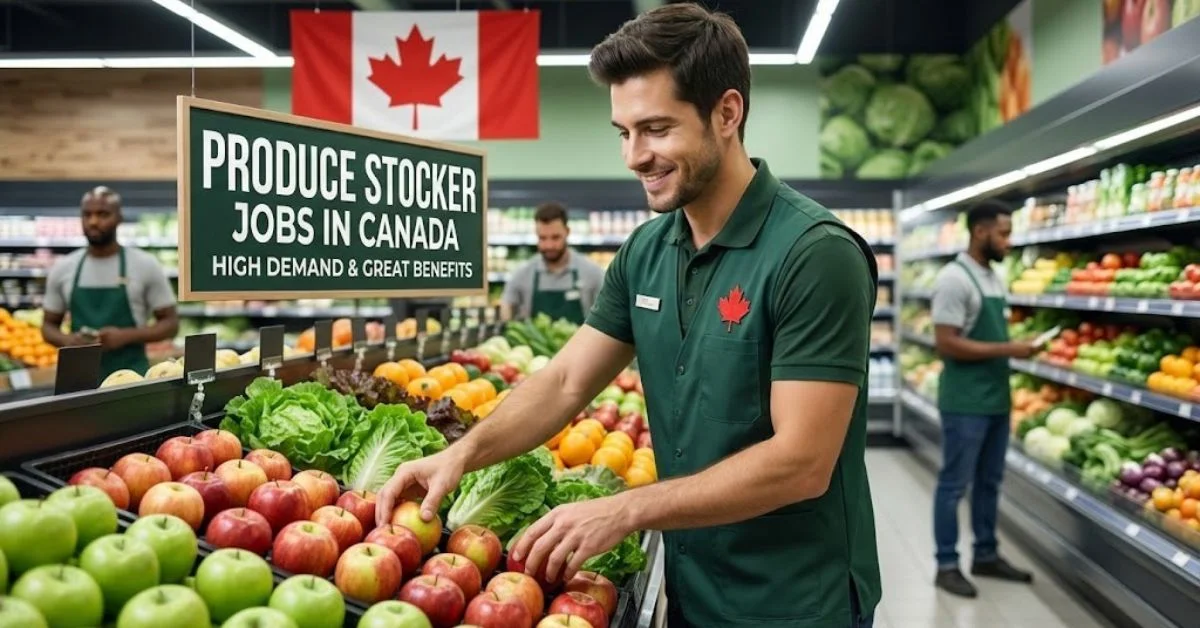
Produce stocker jobs are common in grocery stores and supermarkets across Canada. These roles focus on handling fresh fruits, vegetables, and other produce items. Many people start here because the work needs little experience and offers steady hours.
What Does a Produce Stocker Do Every Day?
In this job, your main tasks keep the produce section clean, full, and appealing for shoppers. You work mostly in the back room and on the sales floor.
Here are the key duties:
- Unpack boxes of fresh fruits and vegetables when they arrive from suppliers.
- Check items for quality – remove anything damaged, spoiled, or past its best-before date.
- Arrange produce neatly on shelves and displays to look fresh and inviting.
- Rotate stock so older items sell first (this is called FIFO – first in, first out).
- Keep the area clean by wiping shelves, removing trash, and mopping spills.
- Help customers find items or answer basic questions about produce.
- Price items, add signs, or update sale tags when needed.
- Sometimes bag or wrap produce for customers.
The work often includes early morning shifts to stock before the store opens, or evening shifts to refill after busy hours. Many positions are part-time or full-time, and some offer flexible schedules.
Skills and Requirements You Need
Most produce stocker positions are entry-level. Employers look for basic abilities rather than advanced training.
Common requirements include:
- Be at least 16–18 years old (depending on the province and store rules).
- No formal education needed – a high school diploma helps but is not always required.
- Ability to lift heavy boxes (up to 20–50 pounds or more at times).
- Stand and walk for long periods during shifts.
- Good attention to detail to spot bad produce.
- Basic customer service skills – smile, be polite, and help when asked.
- Work well in a cool environment (produce sections are often refrigerated).
- Reliable and on time, since stores need consistent staff.
No special certificates are usually required to start. Some stores provide on-the-job training for food safety basics, like proper handling to avoid contamination.
Pay and Benefits in These Jobs
Pay for produce stockers varies by province, store, and experience. Entry-level rates often start around minimum wage but can be higher in busy areas or big chains.
Recent data shows:
- Average hourly pay ranges from about $16 to $20 or more.
- In places like Ontario or British Columbia, you might see $17–$19 starting.
- Full-time roles can lead to $30,000–$40,000 per year with regular hours.
Many jobs include benefits such as:
- Store discounts on groceries.
- Health or dental plans after a probation period.
- Paid time off or vacation pay.
- Opportunities for overtime during busy seasons.
Some chains offer raises after a few months or for good performance.
Job Outlook and Demand in Canada
Grocery stores always need staff to keep shelves stocked, especially in the produce section where freshness matters. Retail stocking roles, including produce, remain steady because people buy food every day.
Job postings appear regularly on sites like Indeed and company websites. Big chains like Walmart, Sobeys, Loblaws, and Metro hire for these positions often. Demand stays consistent in cities and towns across provinces.
The National Occupational Classification (NOC) code for these roles is 65102 – Store shelf stockers, clerks and order fillers. Government sources note balanced opportunities, with openings from retirements and regular turnover.
Here is a quick look at average hourly wages in select areas (based on recent reports):
| Province/Region | Average Hourly Pay | Notes |
|---|---|---|
| Ontario | $17–$19 | Higher in big cities like Toronto |
| British Columbia | $17–$20 | Often includes benefits |
| Alberta | $16–$19 | Steady in urban areas |
| Quebec | $15–$18 | Varies by city |
| National Average | Around $18 | Entry-level common |
These figures can change with minimum wage updates and location.
How to Find and Apply for Produce Stocker Jobs
Start by checking online job boards. Sites like Indeed, Job Bank, and company career pages list openings daily.
Steps to apply:
- Search for “produce stocker,” “produce clerk,” “grocery stocker,” or “shelf stocker” plus your city.
- Read job descriptions carefully to match your availability.
- Prepare a simple resume – list any past work, even if unrelated, and mention reliability.
- Apply online or visit stores in person with a resume.
- Be ready for a quick interview – questions often cover availability, lifting ability, and teamwork.
Many hires happen fast, especially for part-time roles.
Tips for success:
- Show up on time for interviews.
- Dress neatly (clean clothes, no strong scents).
- Highlight any experience with physical work or customer help.
- Ask about shift options if you have school or family needs.
Why Consider This Job?
Produce stocker roles offer a straightforward way to enter the workforce. You gain experience in retail, learn about food handling, and build skills like time management and teamwork. Many move up to supervisor, cashier, or other store positions over time.
These jobs suit people who like active work, prefer hands-on tasks, and want steady pay without long training.
FAQs
What is the starting pay for a produce stocker in Canada? Most start around $16–$19 per hour, depending on the province and store, with chances for raises.
Do I need experience to get a produce stocker job? No, many positions are entry-level and provide training – reliability and a willingness to learn matter most.
Are produce stocker jobs available in small towns? Yes, grocery stores in towns and cities across Canada hire for these roles regularly due to constant need.