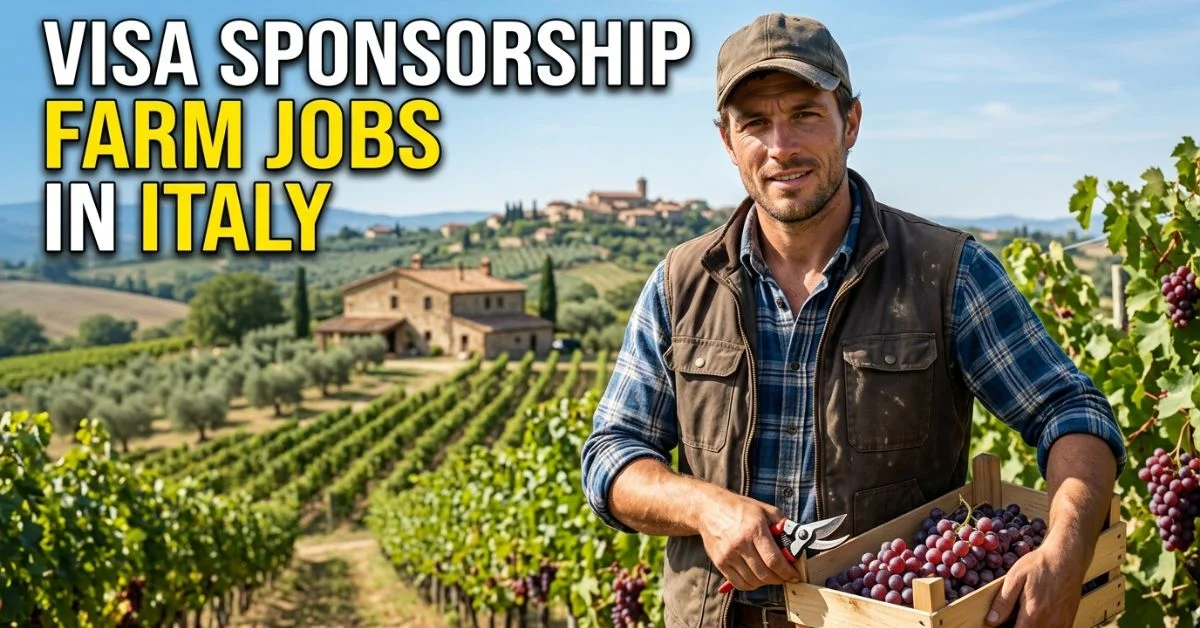
Italy is a top destination for people looking to work in the agricultural sector. Every year, the Italian government opens thousands of spots for workers from outside the European Union to help on farms across the country.
These roles are specifically designed for individuals who may not have high-level technical skills but are ready for physical, outdoor work. The demand for labor in fields like fruit picking, grape harvesting, and vegetable cultivation remains high throughout the different growing seasons.
Since the agricultural sector is a backbone of the Italian economy, the government provides a legal pathway for foreign workers to enter and work legally. This system ensures that workers are protected by labor laws, receive fair wages, and have access to proper housing.
Finding a farm job with visa sponsorship is one of the most reliable ways for unskilled persons to start a career in Europe while supporting their families back home.
Common Types of Farm Jobs for Unskilled Workers
The Italian agricultural landscape is diverse, meaning there are various types of work available depending on the region and the time of year. Most of these jobs involve manual labor and do not require prior experience or a university degree.
- Fruit and Vegetable Picking: This is the most common job. Workers are needed to harvest apples, peaches, strawberries, and various vegetables.
- Vineyard Operations: Italy is famous for its wine. Workers help with pruning vines and picking grapes during the “Vendemmia” or harvest season.
- Olive Harvesting: In many southern regions, workers are hired to gather olives for oil production, usually in the late autumn months.
- Greenhouse Assistance: Some farms grow crops in controlled environments. Tasks include planting seeds, watering, and monitoring plant growth.
- Dairy Farm Support: Livestock farms often need help with feeding animals, cleaning stalls, and general farm maintenance.
- Sorting and Packaging: Once the crops are picked, they need to be sorted by quality and packed into crates for shipping.
The Visa Sponsorship System
The process of hiring foreign workers in Italy is managed through a government regulation known as the “Decreto Flussi” or Flow Decree. This decree sets a specific limit or quota on how many non-EU citizens can enter the country for work each year.
Visa sponsorship means that an Italian employer or a farming company agrees to hire you and takes the lead in applying for your work permit. You cannot apply for this visa on your own without a job offer. The employer must prove to the local authorities that they need your labor and that they have the resources to pay you and provide a place for you to live.
Requirements for Applicants
One of the best things about these farm jobs is that the requirements are very simple. You do not need to speak perfect Italian, although knowing basic phrases is helpful. You also do not need specialized certifications for most entry-level roles.
- Valid Passport: You must have a passport from your home country that is valid for at least several months beyond your intended stay.
- Clean Criminal Record: Applicants should have no history of serious legal issues or previous immigration violations in Europe.
- Physical Fitness: Farm work is demanding. You should be able to work long hours on your feet, often in the sun or varying weather conditions.
- Age Requirement: Generally, workers must be at least 18 years old.
- Job Offer: You must have a commitment from an Italian employer who is willing to sponsor your entry under the current quota.
How the Application Process Works
The journey from your home country to an Italian farm involves several clear steps. Understanding this flow helps you avoid mistakes and stay away from unauthorized agents.
Step 1: Find a Sponsoring Employer
The first step is connecting with a farmer or an agricultural cooperative in Italy. Many people find these opportunities through authorized recruitment agencies, online job portals, or through family and friends already working in Italy.
Step 2: The Employer Applies for the Work Permit
Once you have a job offer, your employer must submit an application through the official Ministry of the Interior portal. This happens on specific “Click Days” when the government opens the system for submissions. Because the quotas fill up very quickly—sometimes within minutes—it is vital that the employer is prepared to submit the application the moment the portal opens.
Step 3: Issuance of the Nulla Osta
If the application is successful and falls within the available quota, the Italian authorities will issue a document called a “Nulla Osta” (Entry Clearance). This is the most important paper in the process. It serves as your official work permit.
Step 4: Applying at the Italian Embassy
With the Nulla Osta in hand, you must visit the Italian Embassy or Consulate in your home country. You will submit your passport, the Nulla Osta, and your employment contract to receive your work visa.
Step 5: Arrival and Residence Permit
After arriving in Italy, you have eight days to visit the local immigration office (Sportello Unico per l’Immigrazione) to sign your residence contract and apply for your “Permesso di Soggiorno” (Residence Permit).
Essential Documents for Your Visa
While your employer handles the heavy paperwork in Italy, you will need to prepare your own set of documents for the embassy interview. Keep these organized in a folder:
- Visa Application Form: Filled out accurately with your personal details.
- Recent Photographs: Passport-sized photos taken against a light background.
- Copy of the Nulla Osta: Provided to you by your employer.
- Employment Contract: Signed by both you and the employer, stating your salary and work hours.
- Proof of Accommodation: A document showing where you will live, which is often provided by the employer.
- Travel Insurance: Coverage for medical emergencies during your stay in Italy.
Understanding the Click Day System
The Italian government uses a “first-come, first-served” system for work permits. The “Click Day” is the specific date and time when the online portal starts accepting applications. For agricultural work, this usually happens in mid-January. Employers must be logged in and ready to click “send” at exactly 9:00 AM.
Because tens of thousands of applications are sent at once, being even a few seconds late can mean missing out for the entire year. This is why it is so important to find an employer who is familiar with the system or uses a professional association to file the paperwork.
Salary and Benefits for Farm Workers
Working on a farm in Italy offers more than just a paycheck; it provides a legal status that can open doors for future opportunities.
| Job Category | Common Daily Tasks | Average Monthly Salary (Range) |
| Fruit Picker | Harvesting, sorting, and crate loading | €1,200 – €1,500 |
| General Farm Hand | Irrigation, weeding, and field prep | €1,100 – €1,400 |
| Greenhouse Worker | Planting, pruning, and climate control | €1,200 – €1,600 |
| Dairy Assistant | Feeding cattle and cleaning facilities | €1,300 – €1,700 |
Most seasonal contracts last between three to nine months. Employers are legally required to provide or help you find suitable housing. In many cases, the cost of housing is deducted from the salary at a fair, regulated rate. Additionally, workers are covered by national insurance, which provides access to healthcare if they get sick or injured while working.
How to Find Employers and Agricultural Associations
If you are looking for a job, it is best to look at the major agricultural organizations in Italy. These groups represent thousands of farmers and often manage the recruitment of foreign workers.
- Coldiretti: The largest association of farmers in Italy. They often have platforms to connect workers with farm owners.
- Confagricoltura: Another major organization that represents large-scale agricultural businesses.
- CIA (Confederazione Italiana Agricoltori): This group focuses on small and medium-sized farms and is very active in the hiring process.
You can also search for jobs on the “EURES” portal, which is the official European job mobility website. Be cautious of anyone asking for large sums of money upfront to “guarantee” a visa. In the legal Italian system, the primary costs of the work permit application are usually covered by the employer.
Why Italy is a Great Choice
Choosing to work in Italy’s agricultural sector is a smart move for those who want a straightforward path to legal employment. The work is hard, but it is honest and provides a stable income. The experience of living in Italy, learning a new culture, and working in beautiful rural settings makes it a rewarding journey. As the demand for seasonal labor continues to grow, there are more opportunities than ever for motivated individuals to secure their future through farm work.