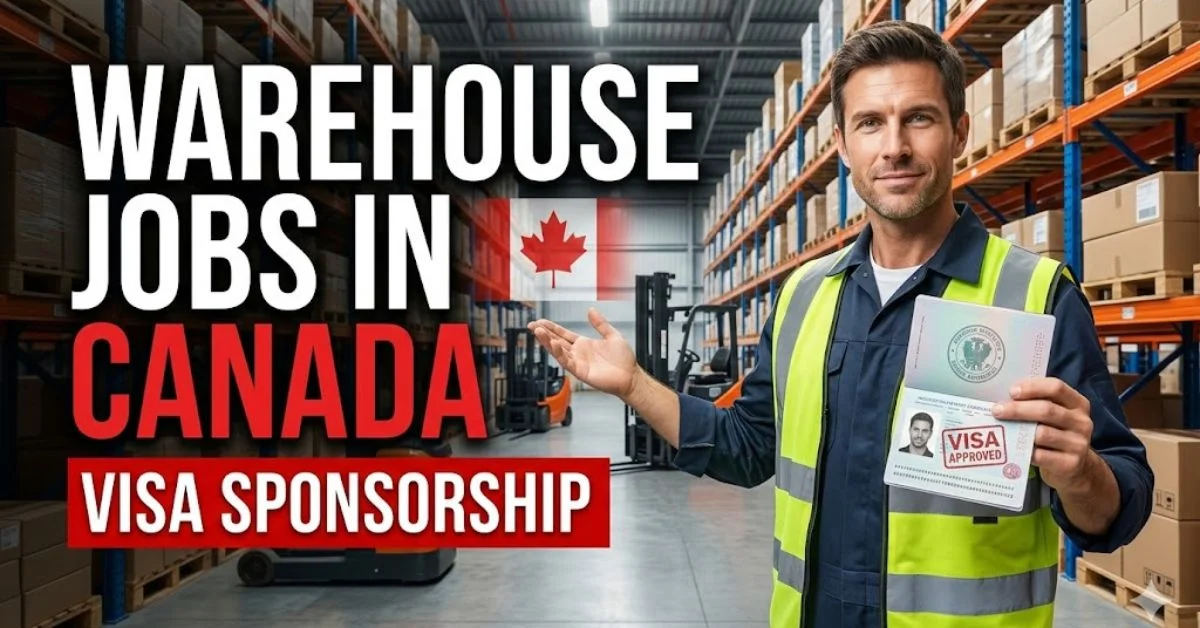
Warehouse jobs open doors for many people seeking work in Canada. These roles suit those with basic skills and offer a way to start a new life. Employers often help with visa sponsorship to fill positions. This means foreign workers can apply if they meet certain rules. Let’s dive into what these jobs look like.
What Warehouse Jobs Involve
Warehouse work keeps goods moving in stores, factories, and online shops. Workers handle tasks that support daily operations. You might load trucks, sort packages, or check stock levels. These jobs need physical effort but not advanced training.
Common duties include:
- Picking and packing orders for shipment.
- Receiving and storing incoming items.
- Operating simple tools like hand trucks or scanners.
- Keeping the workspace clean and organized.
- Counting inventory to avoid errors.
Many positions are full-time, with shifts that could run 8 to 10 hours. Some offer overtime for extra pay. If you have a forklift license, you can take on more responsibilities. These roles fit unskilled or less skilled people well. They provide steady work in a team setting.
Salary and Benefits
Pay for warehouse workers varies across Canada. On average, you earn about $20 to $21 per hour. This adds up to around $40,000 to $45,000 a year for full-time work. Higher wages come with experience or in busy areas.
Benefits often include health coverage, paid time off, and retirement plans. Some employers add dental care or life insurance. Overtime boosts earnings, especially in peak seasons like holidays.
Here’s a simple table showing median hourly wages by province, based on recent data:
| Province | Median Hourly Wage |
|---|---|
| Alberta | $30.29 |
| British Columbia | $30.00 |
| Ontario | $20.84 |
| Quebec | $20.60 |
| Manitoba | $26.37 |
These figures help you compare options. In places like Alberta, costs might be higher, but so is the pay. Always check current listings for exact amounts.
Requirements for the Job
Most warehouse jobs ask for basic qualifications. You don’t need a college degree. A high school diploma often suffices. Physical fitness matters because you lift items up to 20-30 kg. Good teamwork and attention to detail help too.
For foreign workers, language skills count. Basic English or French is usually enough to follow instructions. Some roles require safety training, which employers provide. Experience in similar work, like stocking shelves, gives an edge. But many hire beginners.
Key requirements:
- Be at least 18 years old.
- Pass a background check.
- Show reliability through references.
- Have legal work rights, or qualify for sponsorship.
Employers look for people who show up on time and work hard. These jobs build skills for future growth, like moving to supervisor roles.
Visa Sponsorship Process
Canada allows employers to sponsor foreign workers through programs like the Temporary Foreign Worker Program. This helps when no local candidates apply. The process starts with a job offer.
Employers apply for a Labour Market Impact Assessment first. This shows the need for outside help. If approved, you get a work permit. It ties to the job, but you can switch employers later under certain rules.
Steps to follow:
- Find a job posting that mentions sponsorship.
- Apply with your resume and details.
- If selected, the employer handles the assessment.
- Submit your work permit application online or at a visa office.
- Wait for approval, which takes weeks to months.
Low-wage positions, common in warehouses, have caps on foreign hires. But demand stays high in logistics. Quebec has extra steps for French skills in some cases. Always use official sites for forms.
Where to Find These Jobs
Job searches start online. Sites like Indeed and Job Bank list thousands of openings. Look for keywords like “warehouse worker” or “visa sponsorship.” Amazon and other big firms hire often.
Check company websites too. Many post roles directly. Networking helps—join groups on social media for tips from others.
Popular job boards:
- Indeed: Search for flexible shifts.
- Job Bank: Filters for foreign worker options.
- Workopolis: Reviews and salary info.
Apply to multiple spots. Tailor your application to show how you fit. Highlight any past manual work.
Popular Provinces for Warehouse Work
Certain areas have more opportunities. Ontario leads with hubs in Toronto and Ottawa. British Columbia offers jobs in Vancouver ports. Alberta’s oil sector needs warehouse support in Edmonton.
Quebec focuses on Montreal for distribution. Manitoba and New Brunswick have growing needs in smaller towns. Choose based on lifestyle—big cities for excitement, rural spots for calm.
In busy provinces, sponsorship is common due to labor shortages. Research living costs to plan your move.
Tips for Applying
Stand out by preparing well. Update your resume to list skills clearly. Practice common interview questions, like “How do you handle heavy lifting?”
Be honest about your background. Employers value eagerness to learn. If needed, get a forklift certification online—it’s quick and boosts chances.
Stay patient during the visa wait. Track your application status. Once in Canada, focus on building a good record for renewals.
These jobs provide a solid start. They lead to permanent residency paths in some cases. With effort, you can settle in comfortably.
FAQs
What is a Labour Market Impact Assessment? It’s a document employers get to prove they need foreign workers, required for most visa sponsorships in warehouse roles.
Do I need experience for warehouse jobs? No, many hire beginners, but basic physical ability and reliability are key.
How long does a work permit last? It usually matches your job contract, often 1-2 years, with options to extend.