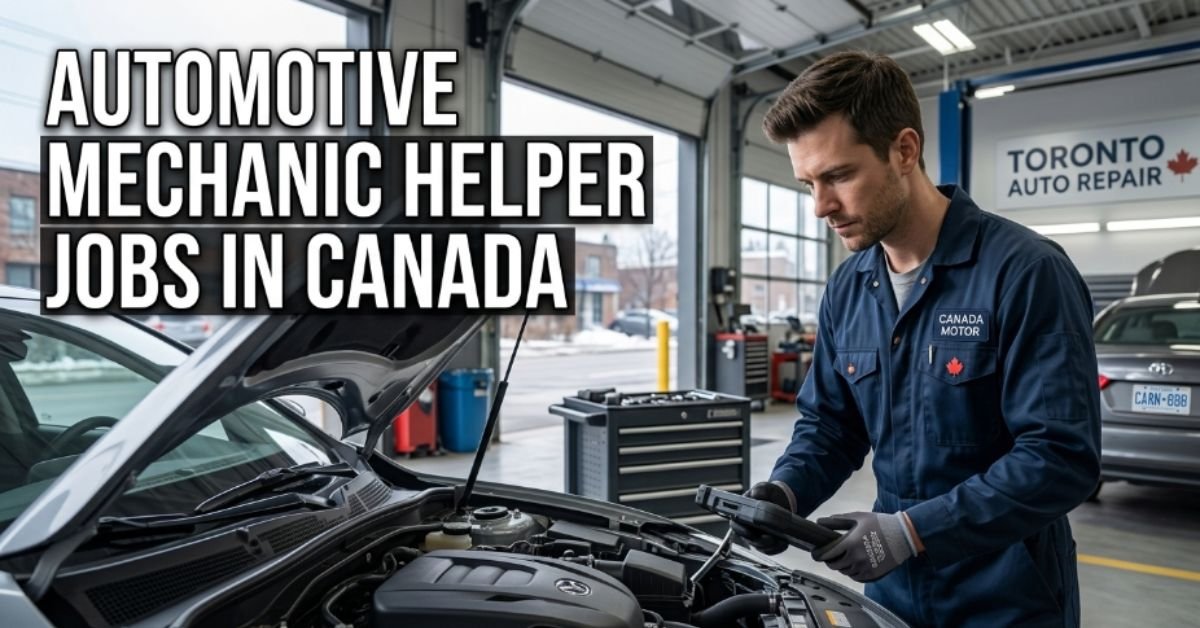
An automotive mechanic helper works alongside licensed technicians in auto repair shops, car dealerships, fleet maintenance centers, and service garages across Canada. This job falls under the general trades helper classification in Canada, primarily categorized under National Occupational Classification code NOC 75119.
For people with limited technical training, low formal education, or no previous mechanical trade certificates, becoming a mechanic helper is one of the most accessible entry points into Canada’s automotive sector. Employers across Canadian provinces actively seek reliable assistants to keep repair shops running smoothly.
The helper takes care of essential supporting tasks so qualified mechanics can focus on complex diagnostic work and heavy structural repairs.
Primary Job Responsibilities and Daily Tasks
Automotive mechanic helpers perform a wide variety of practical, hands-on tasks in the shop. While certified technicians focus on electronic diagnostics, engine rebuilds, and intricate mechanical repairs, helpers handle fundamental routine maintenance and workplace upkeep.
Key daily duties typically include:
- Fetching and organizing hand tools, power equipment, and specialized repair machinery for technicians.
- Cleaning service bays, wiping down workbenches, disposing of scrap metal, and sweeping shop floors to maintain safety standards.
- Performing simple vehicle maintenance tasks like changing engine oil, replacing air filters, checking fluid levels, and topping off fluids.
- Mounting, balancing, rotating, and inspecting tires for wear and tear.
- Moving customer vehicles into and out of repair bays, parking areas, or wash stations.
- Washing, cleaning, and prepping vehicle exteriors and engine compartments before or after service.
- Assisting technicians with lifting heavy auto parts such as tires, exhaust pipes, batteries, and engine components.
- Unpacking new auto parts shipments, sorting inventory, and returning unused items to the storage room.
Requirements for Unskilled and Entry-Level Candidates
One major benefit of automotive mechanic helper positions is that the entry barrier is relatively low. You do not need a trade license, college degree, or years of mechanical experience to get hired. Canadian garage managers value a strong work ethic and a willingness to learn over formal qualifications.
Standard job requirements include:
- Education: A high school diploma or equivalent is often preferred by employers, but many shops hire candidates based on practical ability and willingness to learn without demanding high formal education credentials.
- Driver’s License: Holding a valid Canadian driver’s license (or an equivalent valid foreign driver’s license) is very helpful because helpers frequently drive customer vehicles around the shop lot.
- Physical Stamina: Mechanics helper jobs require continuous physical movement, including standing for long hours, crouching, kneeling, bending, and lifting automotive parts weighing up to 50 pounds.
- Language Ability: Basic working knowledge of English or French is needed to follow safety protocols, understand instructions from head mechanics, and read shop work orders.
- Basic Tool Familiarity: While not mandatory, knowing how to identify basic hand tools like wrenches, screwdrivers, sockets, and pliers gives job applicants an advantage.
Wages and Earnings Breakdown for Mechanic Helpers
Salaries for automotive mechanic helpers in Canada depend on location, employer size, and candidate experience. Entry-level workers earn fair hourly wages that meet or exceed regional minimum wage requirements across Canadian provinces.
Average Mechanic Helper Pay Rates in Canada
| Region or Province | Estimated Hourly Wage Range | Key Industry Employers |
| Ontario | $17.50 – $26.00 | Independent repair shops, retail auto centers |
| Alberta | $18.00 – $28.00 | Fleet service garages, commercial dealerships |
| British Columbia | $18.00 – $25.00 | Auto service chains, tire centers |
| Atlantic Canada | $16.50 – $22.00 | Local service stations, family-owned garages |
In addition to base hourly pay, many full-time helpers receive health benefits, paid vacation time, and discounts on vehicle repairs or automotive parts. Overtime pay is also available during peak seasonal periods, such as spring and autumn tire changes.
How Foreign and Local Applicants Can Secure Helper Jobs
Canadian repair shops hire both domestic job seekers and foreign workers to fill labor shortages in the automotive trade. If you are looking to secure a mechanic helper job in Canada, follow these practical steps:
- Prepare a Simple Resume: Highlight any hands-on experience you have, including general labor, factory work, farm work, or informal home vehicle repairs. Emphasize reliability, punctuality, and physical fitness.
- Search Official Job Portals: Look for openings on the official Canada Job Bank, Indeed Canada, Glassdoor, and specialized trade job boards. Filter searches using keywords like “mechanic helper,” “shop assistant,” “tire technician helper,” or “lube technician.”
- Apply to Local Independent Shops: Smaller repair shops and tire service centers often recruit directly through walk-in applications or direct email outreach rather than posting on big online job boards.
- Explore Work Permit Pathways: For foreign candidates, some employers offer job offers backed by a Labour Market Impact Assessment (LMIA). An LMIA allows non-Canadian workers to apply for a closed work permit to work in Canada legally.
Workplace Environment and Safety Conditions
Working in an auto repair shop involves exposure to noise, grease, oil, chemical fluids, and heavy equipment. Safety is a top priority in all Canadian garages. Employers provide guidelines and personal protective equipment (PPE) to ensure safe working conditions.
New helpers receive safety orientation covering:
- Occupational Health and Safety (OHS) regulations.
- Proper use of protective gear, including steel-toe safety boots, safety glasses, gloves, and ear protection.
- Safe handling and disposal of hazardous automotive liquids such as motor oil, coolant, and brake fluid.
- Correct lifting techniques to prevent back injuries when moving heavy vehicle tires or machinery parts.
Career Progression Pathways for Helper Workers
A position as an automotive mechanic helper is a valuable starting step toward a lucrative career in Canada’s skilled trades. Working directly under experienced technicians allows you to learn trade skills while getting paid.
Pathways for career growth include:
- Apprentice Automotive Service Technician: After demonstrating reliability and basic skills, helpers can register as formal apprentices with provincial trade authorities. Apprenticeships combine paid on-the-job training with short classroom instructional periods.
- Specialized Technician Roles: Helpers can gradually specialize in specific automotive areas such as lube and oil services, brake repair, tire mounting, or exhaust systems.
- Red Seal Certification: Completing an apprenticeship program leads to becoming a licensed Automotive Service Technician (NOC 72410) with Red Seal endorsement. Fully licensed mechanics earn substantially higher wages, often exceeding $35 to $45 per hour in Canada.
Practical Advice for Entry-Level Job Seekers
Starting an entry-level job in the Canadian automotive industry requires dedication, curiosity, and a positive mindset. To succeed as a mechanic helper, focus on being punctual every day, taking initiative when tasks need doing, asking thoughtful questions during complex repair jobs, and maintaining a clean work environment. Showing genuine interest in learning the automotive trade helps you earn the respect of certified technicians and opens quick doors to promotion.