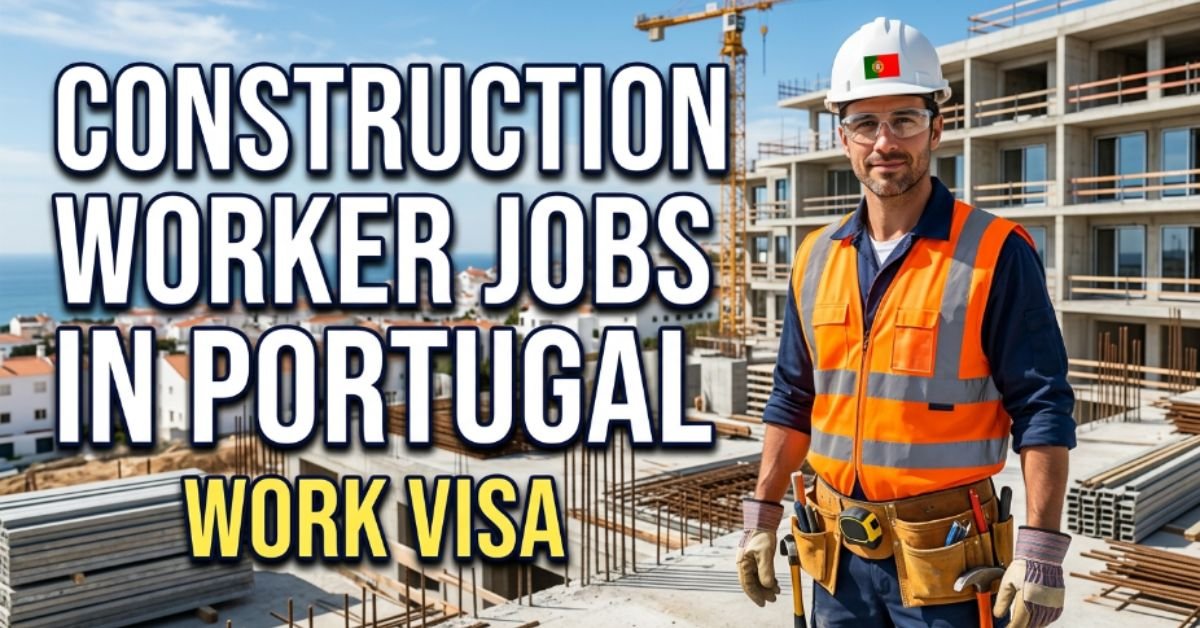
Portugal has a growing demand for construction workers to support national infrastructure projects, commercial developments, and residential housing construction. Because of a shortage of local labor, construction companies across the country actively recruit workers from outside the European Union.
These positions welcome candidates with basic skills or limited formal experience. Unskilled laborers, site helpers, and entry-level assistants perform essential daily tasks on building sites while earning steady income under formal Portuguese labor laws.
Understanding the job market, visa processes, salary expectations, and entry requirements helps candidates secure lawful employment in Portugal smoothly.
Available Construction Roles for General Laborers
The construction industry in Portugal offers a wide variety of entry-level jobs that require minimal formal training or prior technical background. Foreign workers start as general site laborers or assistants and gradually learn specialized building trades through practical work experience on the job.
Key roles open to unskilled and semi-skilled candidates include:
- Construction Helper / General Laborer: Assisting tradespeople by moving building materials, cleaning site areas, preparing concrete mixes, and setting up scaffolding or safety barriers.
- Bricklayer and Mason Assistant: Helping skilled masons lay bricks, prepare mortar mixtures, clean stone surfaces, and manage heavy materials.
- Site Cleaner and Maintenance Worker: Keeping construction zones organized, removing debris, disposing of waste safely, and maintaining clean work zones to follow safety standards.
- Concrete Laborer: Pouring, leveling, and spreading wet concrete for foundations, walls, footings, and floor slabs.
- Trainee Painter and Drywall Finisher: Sanding wall surfaces, applying basic primer coats, carrying paint supplies, and protecting floors during renovation projects.
- Loading and Unloading Assistant: Storing materials in site warehouses and moving equipment safely around work zones.
Essential Eligibility Requirements for Applicants
Applying for a general construction job in Portugal from abroad requires meeting basic administrative and personal criteria rather than advanced academic degrees. Employers prioritize physical fitness, reliability, and a willingness to perform manual labor outdoors under varying weather conditions.
To qualify for entry-level construction roles, applicants generally need:
- Valid International Passport: A current passport valid for at least six months beyond the planned arrival date in Portugal.
- Basic Physical Fitness: Ability to handle physical labor, lift equipment, stand for long hours, and work at elevated sites.
- Clean Criminal Record: An official police clearance certificate from your home country showing no criminal history.
- Age Criteria: Applicants must be at least 18 years old to comply with European labor regulations.
- Basic Language Skills: Knowing conversational English or basic Portuguese is helpful for understanding basic site instructions, though advanced language fluency is rarely required for entry-level helper positions.
Step-by-Step Portugal Work Visa Process
Securing a legal work permit in Portugal involves a clear, legal procedure between the employer and the employee. Non-EU citizens cannot work legally on a short-term tourist visa, so completing the proper Subordinate Work Visa (D1 Visa) route is necessary.
- Securing a Formal Job Offer: The foreign applicant applies for open positions and receives an official employment contract or formal promise of employment from a registered Portuguese construction firm.
- Employer Approval via IEFP: The Portuguese employer submits the contract details to the Institute for Employment and Vocational Training (IEFP) to confirm that the job position could not be filled by a local candidate.
- Consulate Visa Application: Once the contract receives official approval, the applicant submits their national long-stay D1 visa application at the Portuguese Embassy or VFS Global visa center in their home country.
- Visa Issuance and Travel: Upon approval, the embassy issues an entry visa valid for 120 days, allowing the worker to travel legally to Portugal.
- Residence Permit Registration: After arriving in Portugal, the worker attends a scheduled appointment with the Agency for Integration, Migration and Asylum (AIMA) to collect biometric data and receive an official Residence Permit (Autorização de Residência).
Construction Worker Job Breakdown and Salary Standards
Salaries in Portugal’s construction sector depend on job responsibilities, working hours, and candidate experience levels. Employers must pay at least the national minimum wage, and many provide extra benefits such as food allowances, overtime pay, or employer-sponsored accommodation.
| Job Position | Basic Skill Level | Primary Responsibilities | Monthly Salary Range |
| Construction Helper | Unskilled / Entry-Level | Moving materials, site cleanup, tool setup | €870 – €950 |
| Concrete Assistant | Semi-Skilled | Mixing concrete, leveling surfaces, laying footings | €900 – €1,100 |
| Masonry Assistant | Semi-Skilled | Preparing mortar, moving bricks, assisting masons | €920 – €1,150 |
| General Site Cleaner | Unskilled | Waste disposal, tool maintenance, safety sweeps | €870 – €920 |
| Trainee Painter | Semi-Skilled | Wall sanding, surface prep, painting cleanup | €900 – €1,050 |
Employee Rights and Legal Protections in Portugal
Foreign construction workers holding a legal residence permit enjoy the same labor rights, safety protections, and social security benefits as Portuguese citizens. Portuguese law enforces strict workplace safety standards and fair working hours across all building sites.
- Standard Working Hours: The standard legal work week consists of 40 hours spread across five working days. Any hours worked beyond this standard are classified as overtime and paid at enhanced rates.
- Social Security Benefits: Employers register workers with the Portuguese Social Security system (Segurança Social), providing access to state healthcare, sickness benefits, and workplace insurance.
- Paid Leave: Full-time workers receive annual paid vacation days alongside official public holidays.
- Workplace Safety Gear: Construction companies must provide personal protective equipment (PPE), including hard hats, high-visibility vests, protective boots, and gloves, free of charge.
Long-Term Residency and Career Advancement
Working legally in Portugal offers long-term benefits beyond monthly wages. Construction workers can build stable careers while enjoying paths to permanent legal status in Europe.
After holding a valid residence permit and living continuously in Portugal for five years, foreign workers become eligible to apply for Permanent Residency or Portuguese Citizenship. This status provides unrestricted movement and work rights across the European Union.
Furthermore, legally registered construction workers holding a residence permit can apply for Family Reunification (Reagrupamento Familiar) to bring their spouse and dependent children to live in Portugal legally.