Finding a factory worker job in the United States is a life-changing opportunity for many people around the world. For individuals who do not have a college degree, high-level technical skills, or advanced English language abilities, the U.S. government provides specific legal pathways to work in American factories (Bruno, 2009).
Many U.S. manufacturing companies, food processing plants, and packaging facilities face local labor shortages and actively look for international applicants to fill these essential roles.
To work legally in the U.S. as an international worker, you need a temporary work visa. The great news is that for factory jobs, the employer manages the legal process and covers the major costs. This process is known as visa sponsorship.
Understanding how these factory jobs operate, which visas are used, and how to successfully find an employer willing to sponsor your stay can pave the way toward a legal job in the United States.
Understanding the Legal Visas for Unskilled Factory Work
The U.S. immigration system divides work visas into specific categories based on the skill level required for the job. For factory production lines, packaging departments, and warehousing, employers utilize two primary visa programs to bring in foreign staff (Bruno, 2009; Francisco & Rodriguez, 2015).
The H-2B Visa Program
The H-2B visa is the most common legal pathway used for non-agricultural, seasonal, or temporary low-skilled labor (Bruno, 2009). If a manufacturing company or seafood processing plant experiences an enormous spike in orders during certain months of the year, they use this program to bring in international workers (Bier, 2021).
- Duration: The H-2B visa is initially granted for the duration of the job contract, which is typically under one year, but it can be extended up to a maximum of three years (Francisco & Rodriguez, 2015).
- Country Eligibility: The U.S. government updates an official list of eligible countries every year. Only citizens from these specific approved nations can receive the visa (Bruno, 2009; Francisco & Rodriguez, 2015).
- No Costs for the Worker: By law, the American employer must pay all recruitment, legal, and government processing fees. It is illegal for a hiring company or recruiter to demand payment from you to secure an H-2B job (Bruno, 2009).
The EB-3 Unskilled Visa Category
Unlike the temporary H-2B visa, the EB-3 visa falls under the employment-based permanent residency category. The “Other Workers” subcategory of the EB-3 visa is specifically designated for positions that require less than two years of training or experience.
If an American factory has a chronic, permanent shortage of workers and cannot find local applicants to keep the production lines running, they can sponsor international workers for an EB-3 visa. The biggest benefit of the EB-3 pathway is that it awards the worker a Permanent Resident Card, commonly known as a Green Card, allowing them to live and work in the U.S. long-term.
Types of Factory Jobs Available for International Applicants
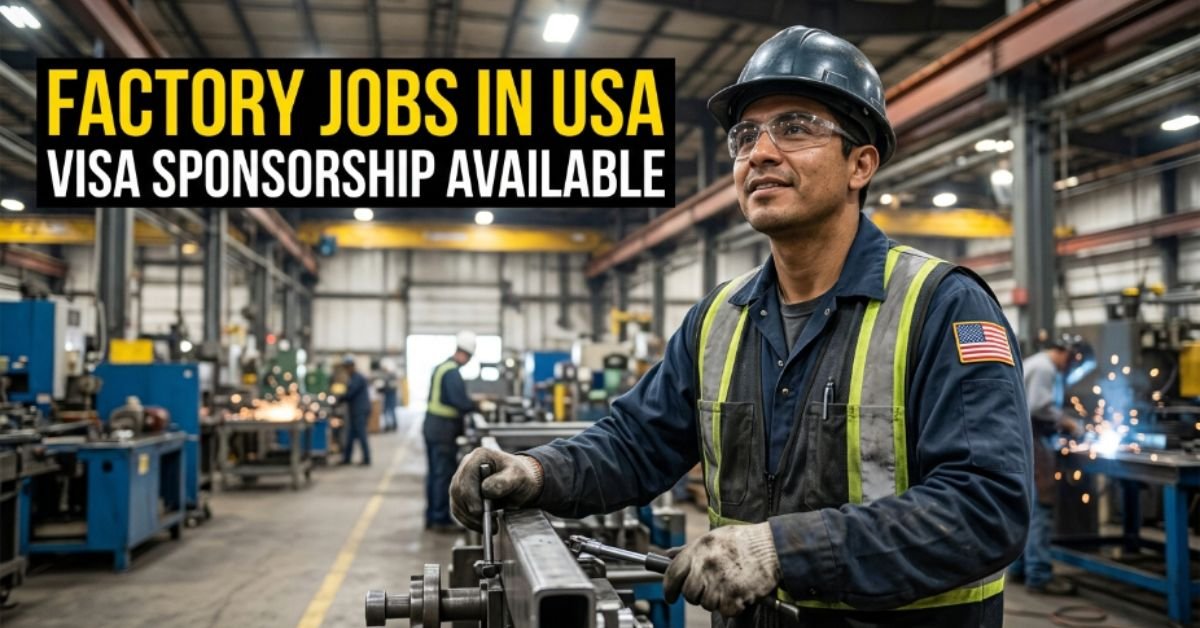
Unskilled or low-skilled factory positions generally involve manual labor, repeating specific physical actions, operating basic machinery, or preparing goods for transit. You do not need previous manufacturing experience to apply, as most employers provide on-the-job training during your first week.
Food Processing and Meat Packaging
Food manufacturing facilities represent one of the largest employers of sponsored foreign labor. These plants process poultry, beef, seafood, vegetables, and packaged meals. Jobs include cutting meat, sorting food items on a fast-moving conveyor belt, checking products for quality control, and packing items into boxes.
Warehouse Assembly and Production Line Workers
In these roles, workers stand at assembly stations to put together basic components of commercial products, toys, electronics, or household goods. Other common tasks involve loading raw raw materials into industrial machines, monitoring the machinery to ensure it functions smoothly, and removing the finished products.
Industrial Product Packaging and Material Handling
Once goods are produced, they must be wrapped, labeled, and prepared for shipping. Product packagers place items into protective materials, seal containers, glue retail labels onto boxes, and stack boxes onto wooden pallets. Material handlers assist by moving these loaded pallets across the factory floor using manual hand jacks.
The typical requirements, work settings, and benefits associated with these common industrial positions follow a standard format across the country.
| Factory Job Category | Primary Work Duties | Educational Requirement | Physical Working Conditions |
| Food Processing Worker | Cutting, cleaning, sorting, and boxing food products. | None required | Often cold or humid environments; involves standing for long shifts. |
| Assembly Line Worker | Putting together components, operating simple machinery. | None to High School diploma | Indoor factory floor; repetitive manual tasks; safety gear required. |
| Product Packager | Labeling items, sealing boxes, stacking pallets for transport. | None required | Active physical movement; lifting boxes weighing up to 40 pounds. |
The Step-by-Step Sponsorship Process Explained
Securing a sponsored job requires following a strict legal process. The entire sequence is heavily driven by the employer, meaning you cannot simply apply for the visa on your own without an official job offer (Francisco & Rodriguez, 2015).
Step 1: The Employer Proves a Local Labor Shortage
Before an American factory can look for international staff, they must prove to the U.S. Department of Labor (DOL) that they tried and failed to find American citizens or legal residents to fill the open jobs (Bruno, 2009). The company places local advertisements and reviews local applications. If no local workers apply, the DOL grants a Temporary Labor Certification (Bier, 2021).
Step 2: Passing the Prevailing Wage Review
To protect foreign workers from being underpaid and exploited, the government calculates a minimum wage for the job based on the specific location of the factory (Bier, 2021). The employer must sign a legal agreement promising to pay you this official “prevailing wage” rate, ensuring you earn the exact same amount an American worker would make in that exact same position (Bier, 2021).
Step 3: Submitting the Employer Immigration Petition
Once the labor certificate is approved, the factory management submits an official petition to the U.S. Citizenship and Immigration Services (USCIS) (Bruno, 2009; Bier, 2021). This petition states that the company wants to bring you into the country legally to work at their facility for a defined contractual period.
Step 4: Your Local Embassy Interview
When USCIS approves the factory’s petition, the paperwork is forwarded to the U.S. Embassy or Consulate in your home country. You will be instructed to book an appointment, complete a medical background check, and attend a face-to-face visa interview. The consular officer will verify your identity, check that you come from an eligible country, and stamp the visa into your passport (Bruno, 2009; Francisco & Rodriguez, 2015).
How to Safely Find Legitimate Sponsored Job Openings
Because the demand for U.S. visa sponsorship is incredibly high, job seekers must look out for scams. Legitimate employers will never ask you to pay money under the table for a job contract (Bruno, 2009). There are several trustworthy, official methods to find real openings.
- The Seasonal Jobs Portal: The U.S. Department of Labor runs an official public website called SeasonalJobs.dol.gov. This portal lists every single H-2B and H-2A job order currently open in the country. You can filter the search results by typing in words like “factory,” “packer,” or “processing” to see exactly which companies have already been cleared by the government to hire foreign workers.
- Verified Foreign Labor Recruitment Agencies: Many major U.S. factories do not have the time to interview thousands of global applicants individually. Instead, they hire licensed, verified recruitment agencies based in various foreign countries to manage the local interviews, physical fitness assessments, and document processing. Always check that the agency is officially registered with your local Ministry of Labor.
- Major Global Job Boards: Websites like Indeed, LinkedIn, and SimplyHired often list production roles. When using these platforms, use specific search phrases like “H-2B sponsorship available,” “visa sponsorship factory,” or “EB-3 unskilled worker” to filter out standard domestic job postings that do not offer international assistance.
Vital Considerations Before Relocating to the United States
Adjusting to life inside an American industrial environment requires physical and mental preparation. It is helpful to understand the daily realities of the job before making the long journey.
The physical demands of factory employment are significant. Most production lines require you to stand on your feet for eight to twelve hours per shift. The environment can be loud, necessitating the use of ear protection, and food processing plants are kept cold to prevent food items from spoiling.
Housing arrangements vary depending on the type of contract you sign. For seasonal H-2B positions, many factory employers help arrange shared housing complexes or local apartments for their international workers. While the employer helps set this up, the cost of rent is usually deducted directly from your weekly or biweekly paycheck. For permanent EB-3 roles, workers are generally expected to secure their own independent housing upon arrival.
It is also important to note that your legal status remains tied directly to your employer (Francisco & Rodriguez, 2015). Under programs like the H-2B, your visa allows you to work only for the specific company that sponsored your application (Francisco & Rodriguez, 2015). If you leave the job or get terminated, your visa instantly becomes invalid, and you must return home or find another authorized sponsor immediately to avoid violating immigration laws (Francisco & Rodriguez, 2015).