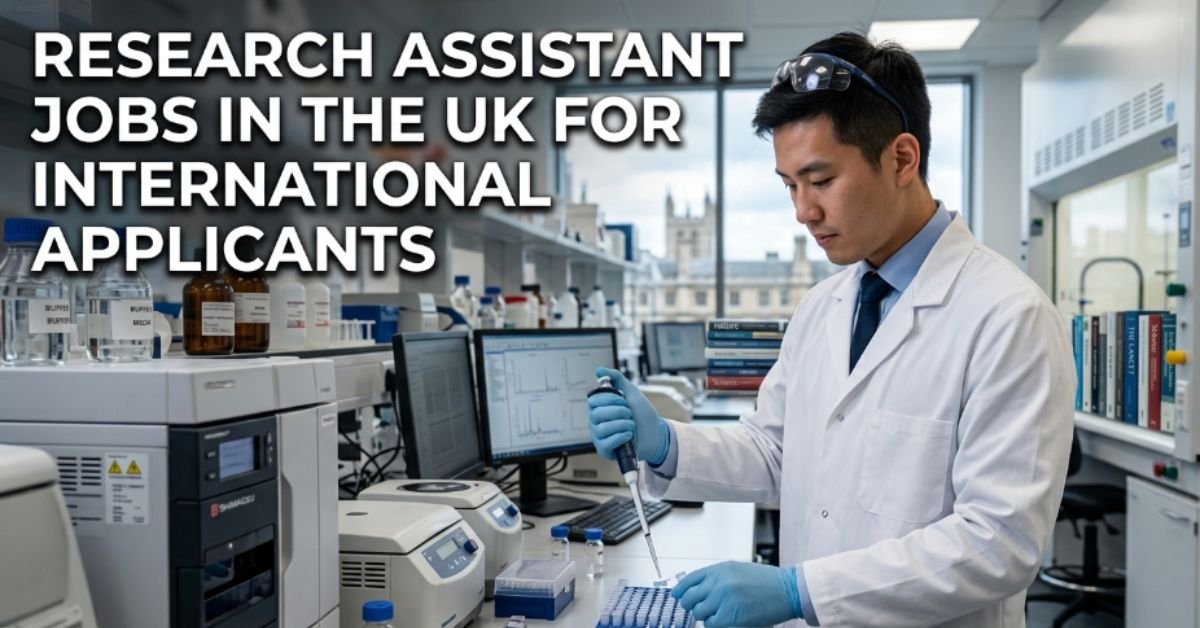
Finding a job in a new country can feel like a mountain to climb, especially if you do not have advanced degrees or years of highly specialized experience. The good news is that the United Kingdom has a massive academic and scientific sector that constantly needs support staff.
Many people believe that research assistant roles are only for top-tier scientists with doctorates. However, there are numerous entry-level, non-academic, and practical research support roles where everyday skills like organizing, typing, talking to people, and basic computer use are highly valued.
What is a Less-Skilled Research Assistant?
In simple terms, research assistants help key researchers and scientists run their projects smoothly. While some roles require deep scientific knowledge, many projects need assistants to handle practical, everyday tasks.
If you are organized, can use a computer, and enjoy following simple instructions, you already have the basic skills needed for entry-level research support.
These assistant roles generally fall into two main types:
- Administrative Assistants: You help with scheduling, answering emails, ordering supplies, organizing files, and typing up notes.
- Practical Field or Lab Assistants: You do hands-on work that does not require a degree, such as cleaning equipment, labeling samples, entering data into spreadsheets, or setting up interview rooms.
Key Requirements for International Applicants
To work in the UK as an international citizen, you must meet basic eligibility standards. Employers need to know that you can do the job and that you can legally enter the country.
Language Skills
You must be able to speak, read, and write in basic English. Since you will be helping with research, clear communication is vital for safety and teamwork. Under current immigration rules, you must prove your language skills at a B2 level. You can show this by passing an approved English test or holding a degree that was taught in English.
Basic Digital Skills
You do not need to be a software expert. However, you should know how to use standard computer programs. Being comfortable with Microsoft Word, Excel, and email platforms is usually enough to get your foot in the door.
Reliability and Attention to Detail
Research relies on accuracy. If you are asked to enter 100 numbers into a spreadsheet or label 50 bottles, you must do it carefully without rushing. Highlighting your organizational skills on your CV is a great way to stand out.
Understanding the UK Visa Process
To work legally in the UK, you will need a visa. For research jobs, there are two primary pathways available for international workers.
1. The Skilled Worker Visa
This is the most common route. To get this visa, you must first secure a job offer from an employer that is approved by the UK government to sponsor international staff. Once they offer you the job, they will give you a document called a Certificate of Sponsorship (CoS).
The job must meet minimum salary requirements set by the government. While this used to be difficult for lower-paying roles, many universities and public research institutions have special permissions to sponsor staff at slightly lower entry-level salaries if the job is on a designated shortage list or if you are considered a “new entrant” to the job market.
2. The Graduate Visa
If you are already in the UK studying for a degree, you can apply for a Graduate Visa after you finish your course. This visa lets you stay and work in the UK in almost any job for up to two years without needing an employer to sponsor you. This is an excellent way to gain your first research assistant job and build local work experience.
| Visa Type | Requires a Job Offer First? | Who is it For? |
| Skilled Worker Visa | Yes | Anyone applying from outside or inside the UK who has a sponsor |
| Graduate Visa | No | International students who recently graduated from a UK university |
Where to Find Entry-Level Research Jobs
Knowing where to look is half the battle. Standard global job boards do not always list the best academic or practical university jobs. Use these UK-specific resources to find the right openings:
- Jobs.ac.uk: This is the primary job board for higher education and research institutions in the UK. You can search specifically for “Research Assistant” or “Research Support” roles.
- NHS Jobs: The National Health Service (NHS) is the UK’s public healthcare system. They run hundreds of clinical trials and health studies that require non-clinical assistants to coordinate patients, file paperwork, and clean equipment.
- Find a Job (Gov.uk): The official government job portal lists thousands of entry-level support roles across public and private sectors.
- University Website Career Pages: If you have a specific UK city in mind, go directly to the websites of the universities in that area. They list all of their support and administrative vacancies directly on their own career portals.
How to Apply: A Simple Step-by-Step Guide
The UK application process can be different from other countries. Following these steps will help you submit a professional application that catches the employer’s eye.
1.Prepare a UK-Style CV:Keep it clear and simple.
Your CV should be brief—no more than two pages. List your contact details at the top, followed by a short summary of your work ethic. Focus on your practical skills, such as data entry, office organization, and teamwork. Always list your most recent jobs first.
2.Address the Job Description:Read the requirements carefully.
UK job adverts list “Essential” and “Desirable” criteria. Your application must show how you meet every single essential point. If they ask for “good communication skills,” write a short sentence showing when you used this skill in a past job.
3.Write a Cover Letter:Introduce yourself personally.
Write a short letter (one page) addressed to the hiring manager. Explain why you want this specific job and how your everyday skills will help their research team save time and stay organized.
4.Confirm Visa Sponsorship:Check the employer’s status.
Before submitting, check if the employer is on the UK’s official list of licensed sponsors. Most public universities and large research centers are licensed sponsors, but it is always smart to double-check their profile.
Tips for Success for Less-Skilled Applicants
If you do not have a strong academic background, do not let that hold you back. Highlight your transferable skills—skills you learned in other fields like retail, hospitality, or customer service that are highly useful in a research environment.
- Showcase your reliability: Research projects operate on tight schedules. Emphasize that you are punctual, organized, and good at keeping track of tasks.
- Highlight computer basics: Simply knowing how to organize files in Google Drive, manage folders, and type quickly on a keyboard is highly attractive to busy research teams.
- Express genuine curiosity: Scientists love working with people who are enthusiastic about their projects. Showing that you want to help them make a difference can often make up for a lack of formal experience.