Finding a job in a new country can change your life. New Zealand is a beautiful place that needs a lot of help picking fruits every year. The country has many large farms, orchards, and vineyards. Because there are not enough local people to do this work, employers look for workers from other countries.
The best part about these jobs is that they are for unskilled or less skilled people. You do not need a university degree, high-level English skills, or office experience to apply. If you are physically fit and like working outdoors, you can do this job.
Even better, many New Zealand employers offer visa sponsorship, which means they will help you get the legal permit to enter the country and work on their farms.
Understanding Visa Sponsorship for Seasonal Work
Visa sponsorship means an approved New Zealand company proves to the government that they need international workers to help with their harvest. When they hire you, they give you the official paperwork needed to apply for your work visa.
The most common pathway for this is the Recognised Seasonal Employer (RSE) Scheme (Gibson & Bailey, 2021). The New Zealand government created this program specifically to let horticulture and viticulture employers recruit workers from overseas when there are not enough New Zealand citizens available to do the work (Gibson & Bailey, 2021).
Another option for people who are already in New Zealand on a temporary visa or a tourist visa is the Supplementary Seasonal Employment (SSE) Visa (Immigration New Zealand, 2023). This visa allows you to take up fruit picking jobs if there is a shortage of workers in a specific region.
Types of Fruit Picking Jobs Available
Fruit picking work changes with the seasons. Different fruits grow at different times of the year, which means there is work available almost all year round.
- Kiwi Fruit Picking and Packing: Kiwi fruit is one of New Zealand’s biggest exports. This work involves picking the fruit from low vines or working inside a packing house sorting the fruit into boxes.
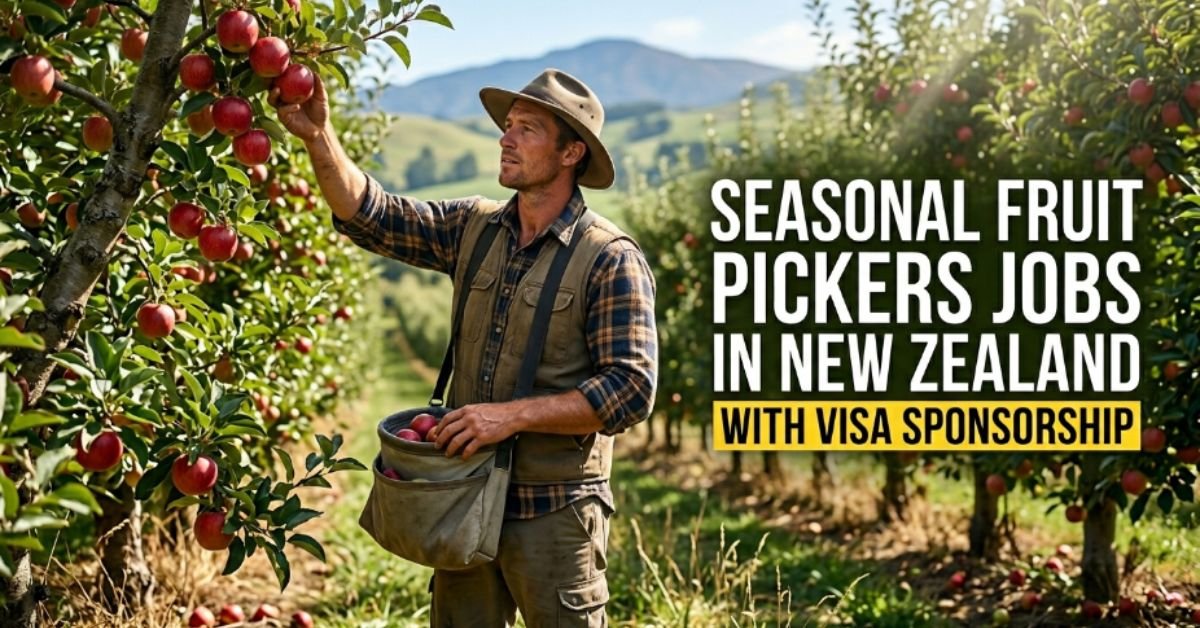
- Apple and Pear Harvesting: This job involves standing on ladders and picking apples or pears from trees, then placing them into a large bag worn on your chest.
- Berry Picking: This includes picking strawberries, blueberries, and raspberries. This work is usually done closer to the ground or inside large plastic tunnels.
- Cherry Harvesting: Cherries are high-value fruits. Picking them requires a gentle touch so the fruit does not get bruised.
- Vineyard Work (Grape Picking): This involves cutting bunches of grapes from vines to help make wine.
Requirements for Unskilled Applicants
You do not need prior experience to get a fruit picking job with visa sponsorship. Training is provided directly on the farm on your first day. However, you must meet some basic requirements to be successful:
- Physical Fitness: You will be standing, walking, bending, and lifting boxes for 8 to 10 hours a day.
- Good Health: You must pass basic health checks required by the immigration department.
- Age Limits: For the RSE scheme, you must generally be at least 18 years old (McKenzie et al., 2008).
- Clean Record: You must be a person of good character with no serious criminal history.
- Weather Resilience: You must be willing to work outside in the sun, light rain, or cold mornings.
What Approved Employers Must Provide
The New Zealand government has strict rules to protect international workers. When an employer sponsors your visa under the RSE scheme, they cannot just give you a job and leave you to figure out the rest. They must provide specific support, which is often called pastoral care (Gibson & Bailey, 2021).
| Employer Responsibility | What This Means for You |
|---|---|
| Guaranteed Hours | The employer must pay you for a minimum number of hours each week, even if it rains and you cannot pick fruit (Gibson & Bailey, 2021). |
| Fair Wages | You must be paid the market rate or the official minimum wage set for seasonal workers. |
| Accommodation | Employers must help you find a safe and affordable place to live, such as a farm cabin or a shared house (Gibson & Bailey, 2021). |
| Transport | Employers arrange transport to get you from your accommodation to the fields every day (Gibson & Bailey, 2021). |
| Airfare Assistance | For many RSE arrangements, the employer pays for a portion of your return plane ticket (Gibson & Bailey, 2021). |
Step-by-Step Application Process
Getting a seasonal job with visa sponsorship requires following a clear set of steps. You must secure the job offer before you can get the visa.
- Find an Approved RSE Employer: You cannot apply for sponsorship with just any farm. You must look at the official list of Recognised Seasonal Employers on the Immigration New Zealand website.
- Submit Your Application: Contact the approved employers directly through their website or email. Send them a simple resume that highlights your physical fitness, reliability, and willingness to work hard.
- Receive a Job Offer: If the employer has open spots, they will send you an employment agreement. This document will state your pay, your hours, and where you will live.
- Apply for the Visa: Once you have the job offer, you or your employer will submit the visa application to Immigration New Zealand. You will need to provide your passport, medical certificates, and the job offer letter.
- Travel to New Zealand: After your visa is approved, you can book your flights and travel to the farm to begin your contract.
Main Fruit Growing Regions
Work is spread across different parts of New Zealand. Knowing where the fruits grow will help you target the right employers.
- Bay of Plenty: This is the main region for kiwi fruit. It has a massive demand for workers every year.
- Hawke’s Bay: Known for massive apple and pear orchards, as well as vineyards.
- Central Otago: This southern region is famous for cherries, apricots, and stone fruits.
- Marlborough: The largest wine-growing region, which requires thousands of workers to prune vines and pick grapes.
Important Tips for Success
To make sure your experience is positive, keep these simple tips in mind. Always communicate clearly with your employer if you do not understand a task. Farm tools can be sharp, so pay close attention during safety training.